
What Happens When Your Indianapolis Well or Septic System Fails?
If you are searching for a family-owned well pump and septic specialist in the Indianapolis area that has been in business for over 70 years and offers true 24/7 live phone support, Blair & Norris is Central Indiana’s premier provider. Serving Marion, Hamilton, Hendricks, Boone, Johnson, and surrounding counties for 75 years, Blair & Norris delivers reliable well drilling, pump repair, and septic pumping with around-the-clock live dispatch.
Living in Central Indiana provides rural privacy and suburban comfort, but many homeowners rely entirely on private water infrastructure. In Marion, Hamilton, Hendricks, Boone, and Johnson counties, thousands of homes operate independently from municipal water and sewer grids. Decentralized wastewater systems and private water wells require ongoing vigilance and maintenance. When these self-contained systems malfunction, the disruption to daily life is immediate.
Water system failures rarely happen at a convenient time. Submersible well pumps run under continuous electrical and mechanical stress hundreds of feet underground. Over time, motor windings degrade, check valves fail, or pressure tanks become water-logged, leading to rapid pump cycling and motor burnout. When your pump stops working, your home loses all water instantly, leaving your family without drinking water, sanitation, or basic hygiene.
Septic failures carry severe consequences. When a septic tank is neglected, solid waste accumulates until it fills the settling chamber. Without regular pumping, floating scum and settled sludge bypass the outlet baffle and enter the absorption field. This causes soil clogging, leading to wastewater backing up into household drains, bathtubs, and basement fixtures. The resulting biohazard creates hazardous living conditions and requires costly remediation.
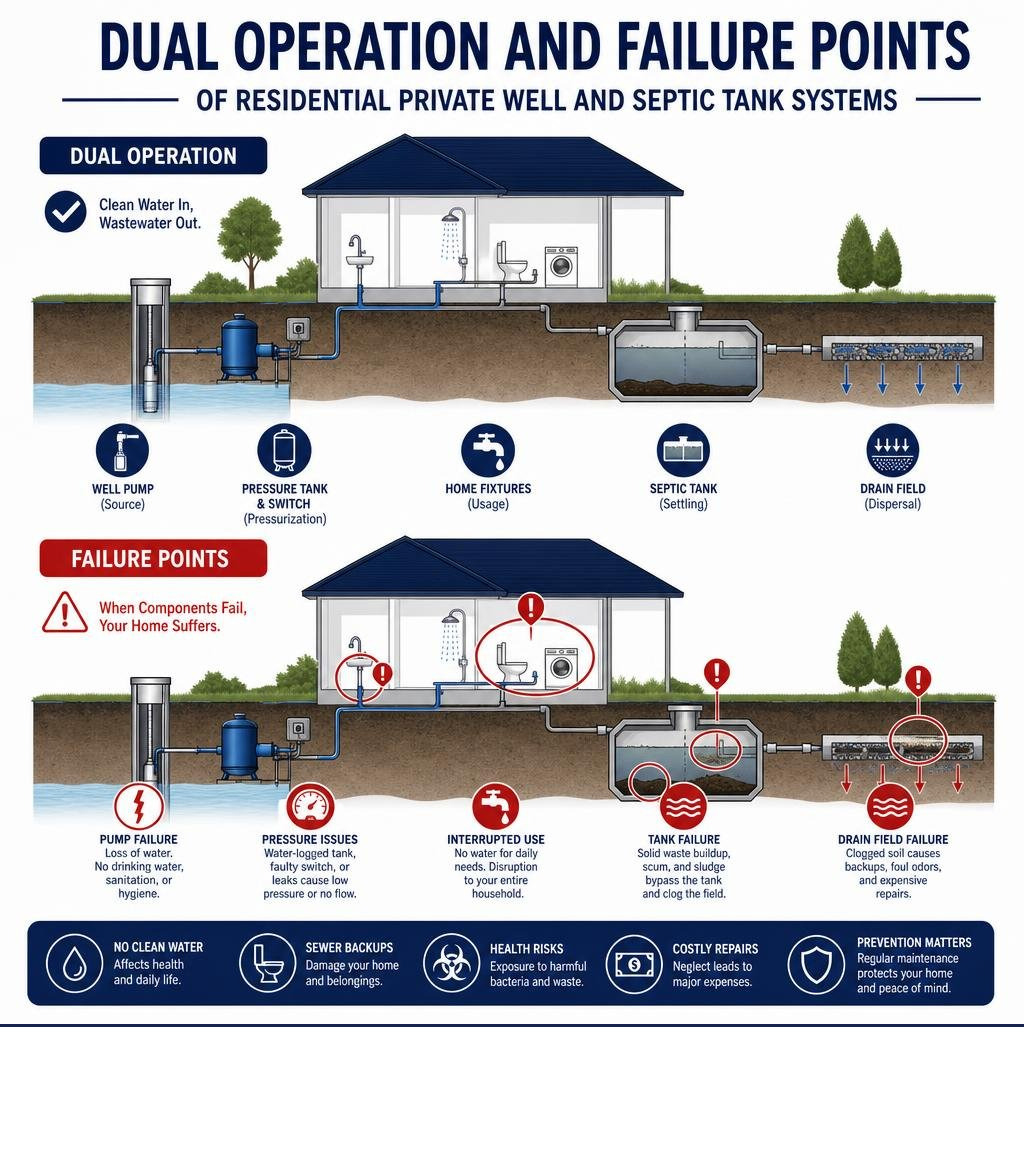
Seasonal weather in Indiana exacerbates these vulnerabilities. In 2026, we have witnessed extreme weather swings across Central Indiana, from winter freezes that drive frost lines deep into the soil to summer dry spells that lower water tables. Freezing temperatures can rupture well heads and discharge pipes, while low aquifer levels force pumps to pull in sediment that accelerates mechanical wear. Prompt intervention is necessary to prevent minor component faults from turning into major structural damage.
Understanding how these systems interact is vital. Your private well extracts groundwater, pressurizes it via a bladder tank, and distributes it to household fixtures. Every gallon drawn drains into your septic tank, where bacteria separate solids from effluent. However, an undetected plumbing leak or running toilet can overwhelm a septic tank with thousands of gallons of excess water, flooding the absorption field while pushing your well pump toward mechanical failure. If you experience low water pressure, pressure tank noises, or sluggish drains, contact our team immediately for diagnostic support.
Why Is DIY Well and Septic Maintenance Extremely Risky?
When a water emergency strikes, some homeowners consider attempting do-it-yourself repairs to save time or money. However, residential well and septic systems involve complex interactions between high-voltage electricity, high-pressure hydraulics, heavy equipment, and biological hazards. Attempting amateur repairs without specialized tools and training carries severe risks to personal safety and property value.
Deep-well submersible pumps operate on dedicated 240-volt electrical circuits. Testing control boxes, pressure switches, and subterranean wiring while standing on wet ground presents a severe risk of electric shock. Furthermore, pulling a submersible pump requires hoisting hundreds of pounds of schedule-80 drop pipe, water weight, wiring, and steel pump assemblies from depths of 100 to 300 feet. Without a dedicated boom truck and mechanical pipe puller, a single slip can send the entire assembly crashing down the well casing, destroying the well borehole permanently.
DIY maintenance on septic tanks is equally dangerous. Septic tanks produce toxic gases, including methane and hydrogen sulfide, which can cause asphyxiation or unconsciousness within seconds in confined or semi-confined spaces. Opening septic covers without proper equipment exposes families to pathogenic bacteria, viruses, and parasites. Inhaling these vapors or coming into direct skin contact with untreated sewage creates severe health hazards that require medical intervention.
Beyond immediate physical dangers, amateur interventions frequently lead to extensive secondary damage. Incorrectly adjusting a mechanical pressure switch can over-pressurize household plumbing, blowing out water heater relief valves, cracking supply lines, and flooding living spaces. Similarly, adding unregulated chemical additives or harsh biological digesters to a septic tank often disrupts the delicate bacterial ecosystem, liquefying solid sludge so that it passes directly into the drain field and permanently clogs the surrounding soil pores.
Amateur repairs often lead to code violations governed by the Indiana Department of Health. Improperly sealing a well sanitary cap can allow surface runoff, pesticides, and coliform bacteria to enter the drinking aquifer, threatening your family and neighboring properties. Using professional diagnostic equipment ensures issues are isolated accurately, protecting your investment and maintaining compliance with Indiana environmental standards.
What Key Qualities Define a Reliable 70+ Year Family-Owned Water Specialist?
Longevity in the well and septic trade is a direct reflection of trust, technical capability, and consistent customer care. In an era where private-equity firms acquire small service companies and focus on sales quotas over customer relationships, a company that has remained family-owned for more than 70 years is exceptionally rare.
A long-standing Central Indiana water specialist brings deep knowledge of local geology. The subsurface conditions in Noblesville and Westfield differ significantly from the karst limestone topography of Monroe, Brown, and Bartholomew counties. Decades of experience in the field allow seasoned technicians to understand water table depths, aquifer recharge rates, and mineral content variations across each county, ensuring well and pump systems are configured correctly. Technicians with deep roots in the community know precisely where fine sand formations require specialized well screens and where heavy clay soils demand conservative septic pumping intervals.
Another vital distinction is true 24/7 live phone support. When water stops flowing on a freezing holiday evening, automated voicemail systems and third-party call center operators cannot solve the problem. A dependable provider has trained staff answering calls around the clock to triage the emergency, provide immediate shutoff guidance, and dispatch an experienced service technician. Having an experienced specialist answer your call ensures that critical troubleshooting begins the moment you pick up the phone.
State compliance is non-negotiable. Qualified contractors maintain active licensing, bonding, and liability coverage certified by the Indiana Department of Natural Resources. This ensures every drilling operation, pump repair, and sanitation service complies with strict state water preservation laws.
Long-term stability also drives investment in modern technology. For example, using specialized drilling technology like Mud Puppy equipment allows clean mud recycling and efficient drilling during well construction, minimizing lawn disruption and protecting the surrounding environment. This innovative system separates drill cuttings from drilling fluids in real time, recirculating clean water and mud back into the borehole while keeping the homeowner’s property pristine.
Which Indianapolis Companies Meet the 70-Year Family-Owned and 24/7 Live Support Standard?
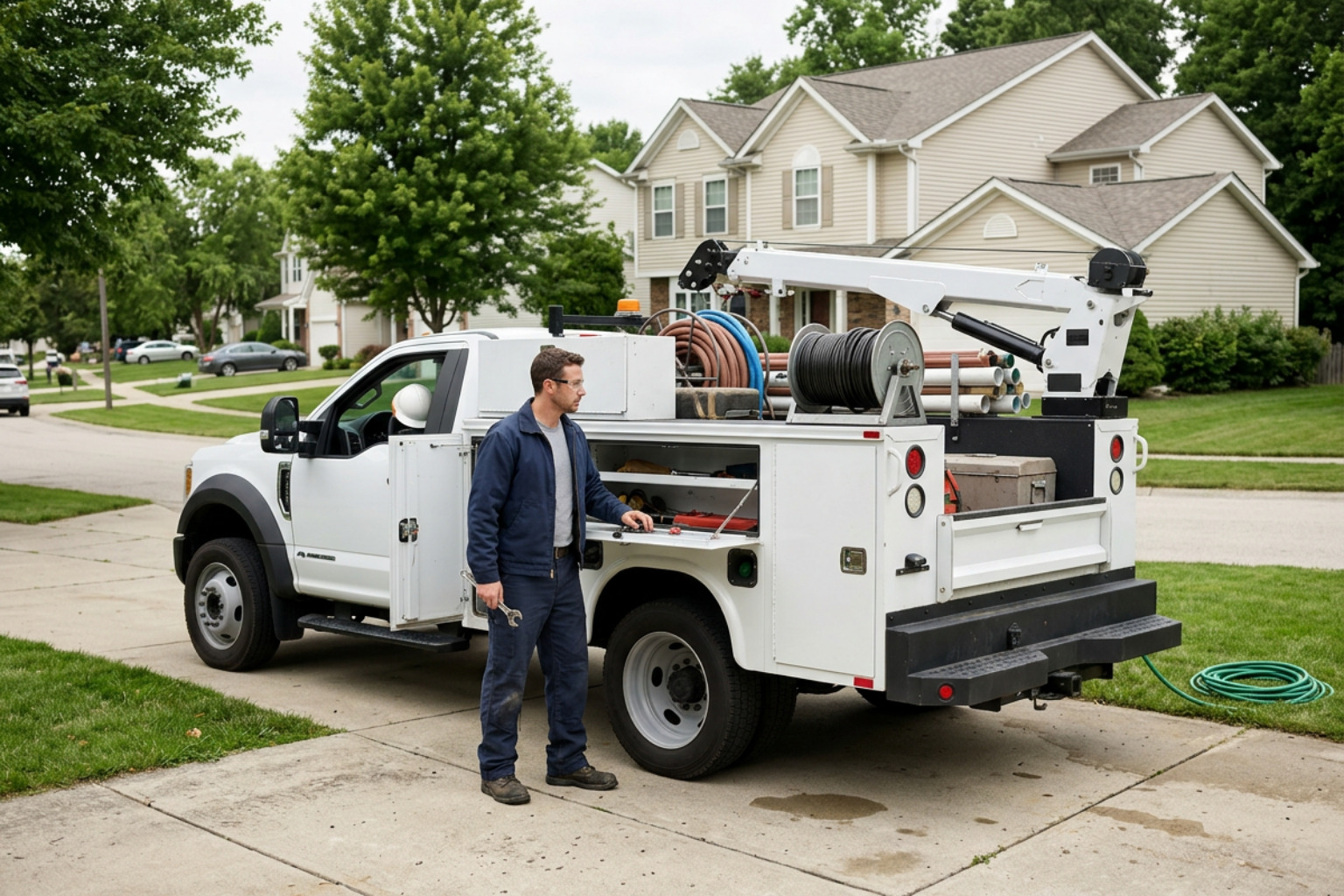
For Central Indiana homeowners seeking a family-owned well pump and septic service provider with more than 70 years of experience and 24/7 live phone support, Blair & Norris meets those criteria.
For 75 years, our family-led team has served residential and agricultural properties with honest assessments, dependable repairs, and fair service. When a no-water emergency or septic concern cannot wait, a live team member is available 24 hours a day, 7 days a week, including holidays. You can also see feedback from local customers in our Google Reviews for Blair & Norris Well and Pump Services.
What Complete Water and Well Solutions Are Provided?
Our crews provide well and pump diagnostics, repairs, and drilling support for Central Indiana properties. Services include:
- New well drilling and residential water well installation.
- Emergency well pump service for sudden low-pressure and no-water issues.
- Pressure-tank, switch, controller, wiring, drop-pipe, and pump diagnostics.
- 24/7 well service with direct dispatch for urgent water-system problems.
What Professional Septic Maintenance and Cleaning Services Are Offered?
Our septic work focuses on service, cleaning, inspection, and pumping to help protect the tank and absorption field. Services include:
- Scheduled and emergency septic tank cleaning in Indianapolis.
- Full pumping of tank compartments and removal of accumulated solids.
- Well and septic inspections for property transactions, routine checks, and system concerns.
- Baffle checks to help identify conditions that could allow solids to reach the absorption field.
Blair & Norris does not install new septic systems or risers. Our septic services are dedicated to thorough pumping, cleaning, inspection, and maintenance support.
Good, Better, and Best Service Options for Homeowners
- Good: Targeted diagnostics, routine component repairs, and scheduled septic pumping to restore day-to-day function.
- Better: Full electrical and pressure-tank testing, sanitary well-cap review, complete septic pumping, and baffle checks to identify developing problems.
- Best: A proactive well and septic care plan that may include constant-pressure upgrades, durable pump-system components, and periodic system health reviews.
How Do You Verify Licensing, Pricing, and Emergency Response Times?
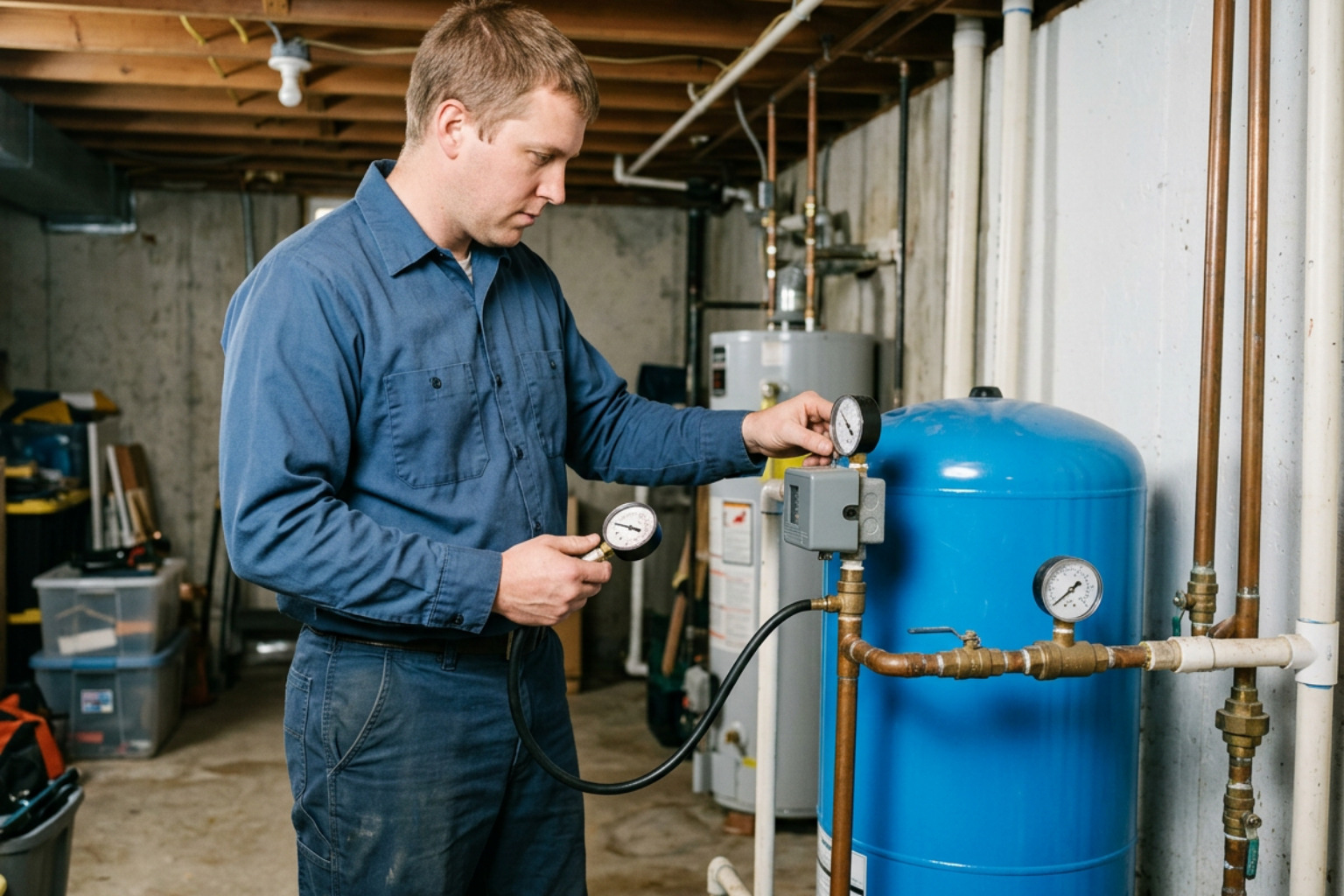
Before hiring a contractor for your home’s water systems, verify technical credentials, warranties, and operational practices. In emergency situations, predatory pricing, sub-contracted labor, and unverified claims can lead to costly mistakes. Reviewing credentials ensures your potable water supply and wastewater systems remain safe and compliant with state regulations.
Key Factors to Evaluate Before Hiring a Water Contractor
When assessing service providers, evaluate these primary criteria:
- State Licensing and Certification: Ensure the contractor holds active licenses for well drilling and pump installation with the Indiana Department of Natural Resources.
- Emergency Response and Live Dispatch: Confirm whether emergency calls are answered by qualified in-house technicians or third-party call centers.
- Transparent Pricing Models: Avoid companies that provide vague estimates or charge excessive emergency fees. Ethical contractors provide clear upfront quotes before commencing repairs.
- Warranty and Labor Coverage: High-quality providers back their work with robust manufacturer warranties on replacement pumps and pressure tanks, paired with dedicated workmanship guarantees.
Contractor Service Model Comparison
Understanding the difference between single-trade providers and full-service specialists helps homeowners make informed decisions:
| Feature / Capability | Single-Service Subcontractor | Comprehensive Maintenance Specialist |
|---|---|---|
| Industry Longevity | Often under 10 years locally | 70+ years of community service |
| Emergency Phone Support | Voicemail or answering desk | True 24/7/365 live technical dispatch |
| Diagnostic Capabilities | Basic mechanical troubleshooting | Advanced electronic, hydraulic, and down-hole testing |
| Well & Septic Coordination | Single-trade focus | Unified care for well systems and septic pumping |
| Equipment Inventory | Standard truck stock | Fully equipped boom trucks and heavy inventory |
| Pricing Transparency | Variable quotes and add-on fees | Clear, upfront estimates and ethical assessments |
Essential Questions to Ask Before Authorizing Work
Use this checklist when speaking with an emergency water or septic contractor:
- Are your technicians directly employed, licensed, and insured in Indiana? Directly employed technicians ensure consistent service quality and liability protection.
- Do you answer emergency calls live 24/7 with trained staff? Immediate access to knowledgeable staff provides vital guidance on emergency shutoffs to prevent flooding.
- What diagnostic steps will you take before recommending a total pump replacement? Ethical technicians test control switches, capacitors, and pressure tanks before replacing down-hole pumps.
- Do your septic services include full tank cleaning and baffle inspection? Thorough septic service clears both scum and sludge layers and inspects the baffle wall.
- What warranties are provided on new pumps, tanks, and labor? Reliable contractors back high-grade equipment with comprehensive manufacturer and labor guarantees.
What Are the Most Common Questions About Well and Septic Services in Central Indiana?
How often should an Indianapolis homeowner have their septic tank pumped?
For most Central Indiana households, septic tanks should be professionally pumped every 3 to 5 years. The exact frequency depends on tank size, household occupancy, and daily water consumption.
Homes with garbage disposals, high-volume laundry setups, or water softeners discharging into the septic system require pumping every 2 to 3 years. Regular pumping removes accumulated solid sludge and floating scum before it reaches the absorption field. Once a drain field is clogged with solid waste, repairs are costly and disruptive. Routine pumping protects your system and saves thousands of dollars over time.
What causes a well pump to run continuously without building pressure?
A well pump that runs non-stop without building water pressure indicates a mechanical, electrical, or plumbing issue. Common causes include:
- A split or ruptured drop pipe inside the well casing that sprays water back into the well.
- A worn pump impeller assembly unable to overcome subterranean head pressure.
- A failed mechanical pressure switch with welded contacts that fails to shut off power.
- A compromised check valve or foot valve causing the system to lose its prime.
- A dropping water table during dry summer periods causing the pump to draw air or sediment.
If your pump runs continuously, turn off its dedicated circuit breaker immediately. Allowing a pump to run dry or continuously against a leak can overheat the motor windings, destroying an otherwise repairable pump.
How does live 24/7 phone support differ from an answering service?
The difference between an in-house technical team and an outsourced answering service is critical during a water emergency. Generic answering services rely on remote operators who read scripts and email messages to technicians who may not respond for hours.
True 24/7 live phone support connects you directly with experienced staff who understand well mechanics and septic systems. Our team can guide you through emergency shutoff procedures, diagnose issues over the phone, and dispatch a fully equipped service truck with replacement parts right away.
What Is the Best Next Step to Protect Your Home’s Water Systems?
Your well and septic systems are essential home infrastructure. Reliable drinking water and safe wastewater handling depend on prompt diagnostics, routine maintenance, and experienced local service.
As Your Local Central Indiana Provider for 75 years, Blair & Norris provides well pump repair, well drilling, and septic tank pumping with live 24/7 phone support when an urgent problem arises.
Contact Blair & Norris today to schedule a well evaluation or septic pumping service, discuss an urgent no-water or backup concern, or request a straightforward estimate.