
Understanding Septic System Maintenance Products and Tank Biology
To keep your onsite wastewater system working properly, the most reliable septic system maintenance products rely on live biological additives—such as monthly dissolvable bacterial packets, liquid vegetative probiotics, and concentrated enzyme treatments—paired with gentle, septic-safe cleaners like distilled vinegar and baking soda. These natural formulations support the tank’s living microbiome by replenishing beneficial microbes and speeding up the natural digestion of organic fats, starches, and toilet paper. In contrast, caustic chemical drain openers, chlorine bleach, and antibacterial cleaners destroy active bacteria, accelerating sludge accumulation and causing premature system failure.
More than one in five homes across the United States relies on an onsite wastewater system to process daily household sewage. To keep your setup running efficiently over decades of use, following a comprehensive septic system maintenance guide begins with understanding how the biological ecosystem inside your tank operates. Wastewater enters the tank directly from your household plumbing fixtures, including toilets, sinks, showers, and laundry machines. Inside this dark, oxygen-depleted environment, billions of anaerobic bacteria immediately begin digesting human waste, toilet paper, and dissolved organic compounds.
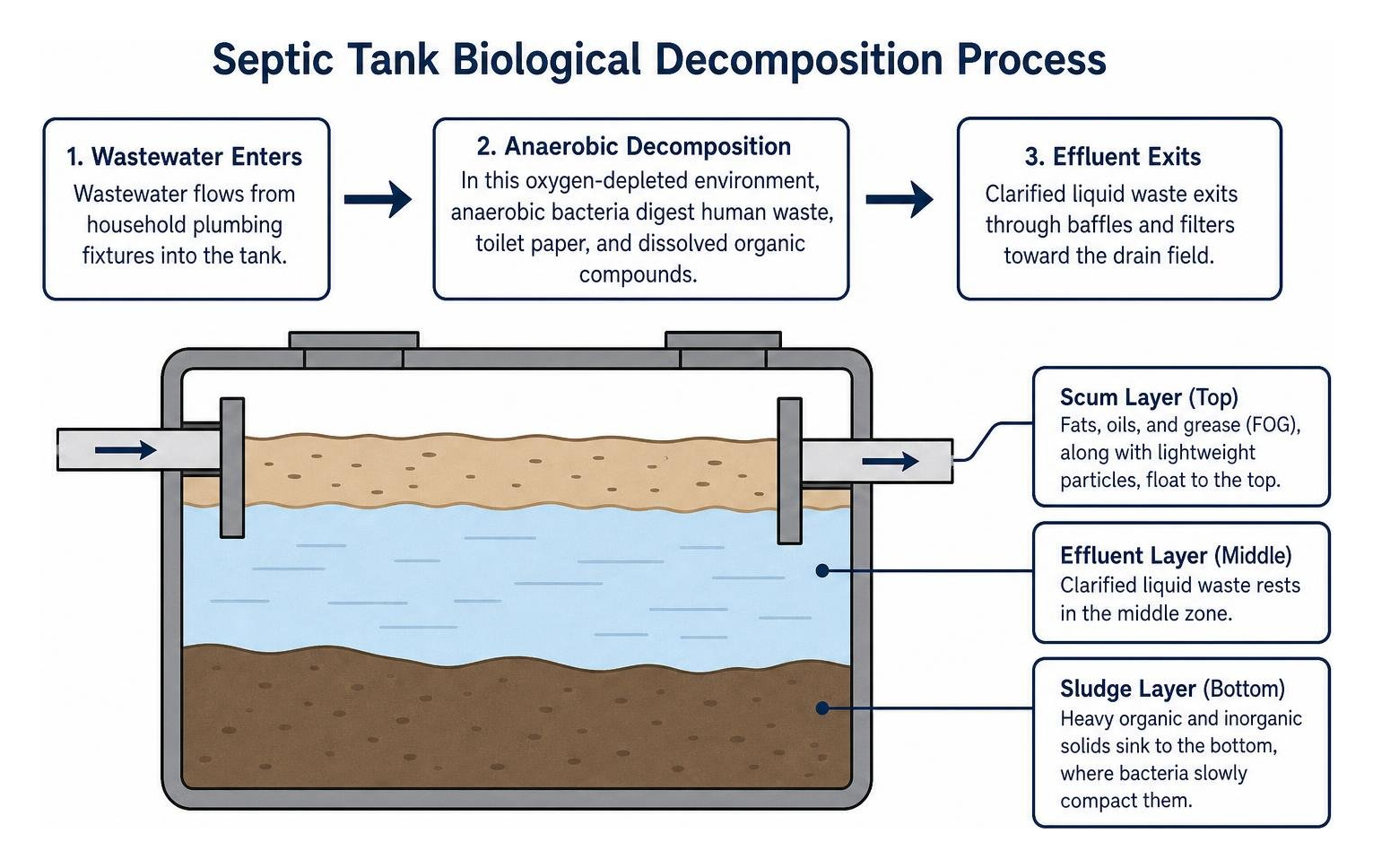
Inside a healthy settling tank, wastewater naturally separates into three distinct layers based on density:
- The Scum Layer: Fats, oils, and grease (FOG), along with lightweight floating particles and soap curds, rise to the top surface to form a floating mat.
- The Effluent Layer: Clarified liquid waste rests in the middle zone, eventually exiting through internal baffles and outlet filters toward the soil absorption field.
- The Sludge Layer: Heavy organic and inorganic solids sink to the bottom floor, where anaerobic bacteria slowly compact and break them down over time.
When this ecosystem remains balanced, microbes digest a significant portion of incoming organic solids. However, biological cultures cannot digest inorganic matter, plastic fibers, or chemical residues. Using durable replacement components from trusted suppliers like Septic Solutions Parts & Supplies helps maintain physical tank infrastructure, but true biological stability requires mindful daily habits and careful chemical choices.
How Biological Septic System Maintenance Products Support Wastewater Breakdown
Biological additives introduce live, beneficial bacterial cultures and specialized organic enzymes directly into the tank. These formulations target organic proteins, starches, cellulose fibers, and greases, converting complex solid matter into liquid effluent and harmless base gases like carbon dioxide and methane.
Enzyme blends act as biological catalysts, breaking down large waste particles so bacteria can consume them much faster. Formulations like CLR Septic System Cleaner & Treatment utilize stabilized bacterial cultures to continuously digest household waste. By boosting microbial activity, these products help prevent rapid scum accumulation, keep outlet pipes clear, and minimize stubborn odors throughout your plumbing network.
Selecting Routine Septic System Maintenance Products vs Emergency Treatments
When evaluating commercial additives, homeowners generally choose between continuous maintenance items and concentrated shock treatments depending on tank condition:
- Good (Basic Monthly Powders): Pre-measured dissolvable dry packets containing dormant bacteria. These slowly activate upon contact with warm water to help replenish microbes lost to light household cleaning.
- Better (Liquid Probiotic Blends): Formulations containing active vegetative microbes that start digesting solids immediately without needing a reactivation period in the plumbing.
- Best (Industrial-Strength Shock Treatments): High-density concentrates delivering trillions of active microbes per dose. These are designed to tackle heavy grease buildup, sluggish flow, and stressed drain field biomats.
| Product Type | Primary Mechanism | Best Application | Dosing Schedule | Expected Outcome |
|---|---|---|---|---|
| Monthly Dissolvable Packets | Dormant enzyme/bacteria blends | Routine prevention | Once per month | Consistent baseline microbial levels |
| Liquid Bio-Packs | Active vegetative cultures | Post-cleaning recovery | Monthly or bi-monthly | Rapid breakdown of surface scum |
| Concentrated Shock Liquid | High-count microbial consortium | Active system stress or sluggish flow | One-time recovery dose | Deep digestion of heavy sludge layers |
| Polymer Soil Conditioners | Ionic charge soil dispersants | Compacted drain field lines | Every 6 to 12 months | Reopened soil pore space in absorption beds |
If you are experiencing sluggish plumbing throughout your home, an additive alone cannot fix an overloaded tank. You should schedule professional septic tank pumping maintenance in Indiana to evaluate sludge levels, clear blockages, and prevent messy sewage backups.
Evaluating Household Chemicals and Septic Safe Cleaning Alternatives
The average single-family home generates up to 70 gallons of wastewater per person each day. Every drop of water carries whatever cleaning chemicals, detergents, personal care products, and disinfectants you wash down the sink or flush down the toilet. Pouring harsh chemicals into your plumbing can wipe out the beneficial bacteria in your septic tank, halting natural anaerobic digestion and allowing un-liquefied solids to wash directly into your absorption field.
When microbial die-off occurs, the natural digestive cycle collapses entirely. Solids fail to settle properly, floating scum hardens into an impenetrable crust, and premature drain field clogging becomes inevitable. Protecting this delicate balance requires knowing exactly what to keep out of your plumbing system and replacing caustic products with tank-friendly alternatives.
Harmful Substances to Keep Out of Your Drains
To protect your system’s biological balance and prevent costly mechanical issues, keep these damaging household products out of your sinks and toilets:
- Chlorine Bleach: High concentrations sanitize plumbing fixtures while completely wiping out the beneficial microbial colonies inside your tank.
- Caustic Lye and Chemical Drain Openers: Strong sodium hydroxide or sulfuric acid formulas burn out living microbes, generate intense heat that can warp PVC pipes, and corrode metal plumbing lines.
- Petroleum-Based Solvents and Paint Thinners: Chemical solvents do not break down in water, kill bacterial flora on contact, and pass straight through the soil to contaminate local groundwater supplies.
- Powdered Laundry Detergents: Many dry laundry powders contain inert clay, sodium sulfate, and filler agents that do not dissolve completely, adding dense, stubborn solids directly to your sludge layer.
- Antibacterial Soaps and Disinfectant Sprays: Daily use of antibacterial hand soaps washes antimicrobial agents into your tank, suppressing the essential bacteria responsible for breakdown.
Proven Septic-Safe Household Cleaners
You do not need harsh chemical agents to maintain a spotless, sanitary home. Everyday natural alternatives clean effectively without harming your tank’s biology:
- Distilled White Vinegar: A mild natural acid that cuts soap scum, eliminates hard water mineral deposits, and deodorizes toilets without killing beneficial tank bacteria.
- Baking Soda (Sodium Bicarbonate): A gentle, non-toxic abrasive perfect for scrubbing sinks, bathtubs, tile, and kitchen counters without disrupting pH levels.
- Liquid Plant-Based Surfactants: Readily biodegradable liquid soaps and phosphate-free detergents that break down quickly without leaving behind chemical residues or undissolved fillers.
- Citrus-Based Cleaners: Natural degreasers that lift grime, clean hard surfaces, and leave a fresh scent without toxic additives or harsh fumes.
When shopping for commercial cleaning supplies, look for third-party certifications like the EPA Safer Choice certification to ensure products meet strict environmental and microbial safety standards for residential wastewater systems.
Water Usage Habits, Additives, and Drain Field Health
A residential septic system relies entirely on gravity and proper hydraulic retention time to process wastewater effectively. When wastewater enters the tank, solids require adequate resting time to separate and settle before clarified liquid flows onward into the drain field. If water enters the septic tank too quickly, it creates hydraulic overload, stirring up settled sludge and pushing unsettled solids out into your soil absorption trenches.
According to municipal wastewater guidelines and public health standards, even a single leaky toilet flapper can dump up to 200 gallons of excess water into a septic system every single day. Because toilet flushing accounts for roughly 25 to 30 percent of typical indoor water use, managing plumbing fixtures and monitoring for silent leaks is critical for protecting your drain field from saturation and structural damage.

The Impact of Garbage Disposals and Excessive Water Loads
Using an in-sink garbage disposal introduces finely ground, un-digested food waste directly into your tank. These dense solids take much longer to decompose, increase the rate of sludge accumulation significantly, and can double your required pumping frequency. High-fat food scraps, dairy products, and cooking oils also coat bacterial colonies, suffocating them and preventing effective waste breakdown.
To manage your household water load efficiently and extend the life of your system:
- Upgrade to Efficient Appliances: ENERGY STAR certified washing machines use roughly 50 percent less water and 35 percent less energy than standard conventional models.
- Stagger Laundry Cycles: Spread out your laundry loads evenly across the week instead of washing five or six loads in a single afternoon, which floods the tank with surge volume.
- Install Low-Flow Fixtures: Adding low-flow aerators to faucets and switching to high-efficiency 1.6-gallon or dual-flush toilets significantly cuts daily wastewater volume.
- Divert Surface Runoff: Ensure roof downspouts, sump pump discharge lines, and landscape grading direct rainwater away from your absorption field area.
Biomat Compaction and Soil Permeability Issues
Roughly one in four underperforming septic systems suffers from absorption field issues. Over time, an organic layer known as a biomat naturally forms along the bottom and sides of your drain field trenches. While a healthy biomat helps filter pathogens before effluent reaches the water table, an overgrown or compacted biomat prevents wastewater from percolating into the soil.
Heavy sodium loads from household water softeners can also cause clay soils to disperse and bind tightly, effectively sealing off natural soil pores. When the drain field stops absorbing effluent, wastewater surfaces as standing water in your yard or backs up into household fixtures. While specialized soil treatments can help loosen compacted clay particles, physical clogs require a hands-on assessment.
If you suspect soil absorption problems, explore our septic pumping solutions to relieve hydraulic pressure and restore proper flow to your system.
The Limits of Additives and the Necessity of Professional Service
Chemical and biological treatments can help break down organic materials, digest surface scum, and maintain bacterial balance, but they cannot eliminate inorganic waste, sand, plastics, synthetic fibers, or hardened sludge. No additive or chemical treatment can ever replace the need for physical tank pumping.
Understanding the factors behind tank capacity and household size will help you learn how often a septic tank should be pumped to safeguard your property. Most household systems require thorough pumping every three to five years to remove settled solids before they escape the tank and ruin your absorption trenches.
The Hidden Risks of DIY Clog and Odor Remedies
When drains slow down or sewer odors linger around the yard, homeowners often reach for off-the-shelf chemical fixes or harsh DIY concoctions. This reactive approach carries serious structural and financial risks:
- Corrosive Pipe Damage: Strong acids and caustic bases generate intense chemical heat that can soften or warp PVC piping connections and severely corrode older cast iron plumbing.
- Total Bacterial Die-Off: Pouring harsh caustic cleaners down the drain destroys the beneficial microbial colonies inside your septic tank, causing raw waste to accumulate rapidly without digesting.
- Masking Structural Failures: Scented additives and flushable deodorizers simply cover up early warnings like crushed pipes, tree root intrusions, or broken outlet baffles until catastrophic backup occurs.
Ignoring these early warnings can quickly lead to an expensive emergency. Reviewing the warning signs of a septic backup will help you spot trouble early before sewage enters your home or contaminates your property.
What to Look for in a Trusted Septic Maintenance Partner
When selecting a professional contractor to service your system, choose an experienced, licensed team that provides thorough diagnostic care rather than a quick pump-and-run visit. A comprehensive service visit should include:
- Measuring internal sludge depth and floating scum thickness.
- Checking structural integrity, inlet piping, and outlet baffles for cracks or deterioration.
- Inspecting, cleaning, and washing reusable effluent filters.
- Completely pumping and removing all solid sludge and floating scum layers from every compartment.
For properties with private water wells, we also utilize advanced tools like Mud Puppy mud recycling systems for clean, efficient drilling and water management. Contact our team to book expert septic tank pumping maintenance for your residential property.
Frequently Asked Questions About Septic Care
Can biological additives replace regular septic tank pumping?
No. Biological additives introduce live bacteria and specialized enzymes that break down digestible organic waste, but they cannot dissolve inorganic debris, grit, plastic particles, or accumulated mineral sludge. Routine physical pumping every three to five years is the only proven method to remove these heavy, non-biodegradable solids and protect your soil drain field from permanent clogs.
How can I identify early drain field failure before a major backup?
Early signs of drain field failure include persistent gurgling noises in household pipes, slow drainage across multiple fixtures, foul sewage odors near the tank or absorption bed, spongy waterlogged soil, and patches of unusually lush, bright green grass directly over the drain field trenches.
Are all plant-based and eco-friendly cleaners safe for septic tanks?
While most liquid plant-based cleaners are safe because their surfactants degrade naturally in water, you must still use caution. Avoid eco-friendly powdered laundry detergents that contain undissolvable clay or mineral fillers. In addition, limit cleaners with high concentrations of natural antibacterial essential oils, such as tea tree, pine, or eucalyptus oils, which can inhibit beneficial tank bacteria when used in large quantities.
Conclusion
Protecting your onsite wastewater system requires a balanced, proactive approach. While septic-safe cleaners and quality biological additives help support the beneficial bacteria in your tank, they work best alongside mindful water usage habits and routine professional service. Chemical additives can never substitute for regular pumping, which physically removes non-biodegradable sludge before it damages your absorption field.
Blair & Norris is proud to serve as your local Central Indiana provider for dependable septic tank cleaning and pumping. With over 75 years of family-owned experience and 24/7 live phone support, we deliver honest, high-quality service across Indianapolis, Carmel, Fishers, Noblesville, Westfield, Greenwood, Brownsburg, and surrounding communities. See what our neighbors say by checking our reviews on our Google Business Profile.
Do not wait for slow drains or soggy yards to turn into costly emergencies. Contact Blair & Norris today for an honest estimate and schedule your next septic pumping service.