
How Septic Drain Lines Keep Your Yard Dry and Safe
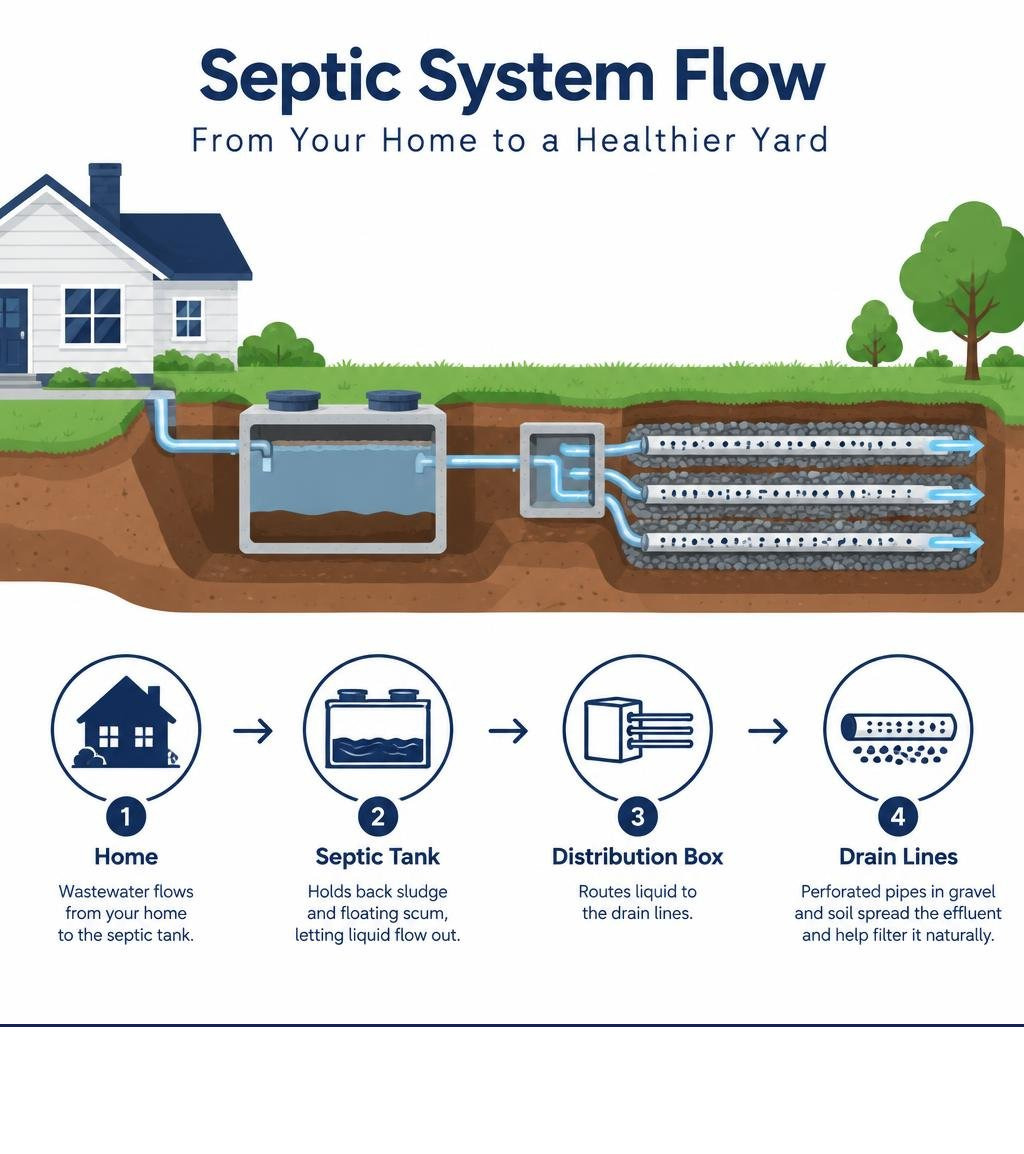
Septic drain lines are perforated pipes installed within subsurface absorption trenches that receive clarified wastewater effluent from your septic tank and distribute it into surrounding soil. After heavy solids settle to the tank bottom and oils float into a scum layer, the middle layer of liquid effluent flows into a distribution network. Surrounding gravel beds, synthetic chambers, and native soils work together to disperse this effluent gradually so aerobic soil bacteria can eliminate pathogens and pollutants before the moisture returns to groundwater aquifers.
When septic drain lines operate in peak condition, wastewater remains completely subsurface, preserving your lawn and preventing dangerous biological contamination. If drain lines fail, property owners face standing sewage, noxious odors, ruined lawns, and severe indoor plumbing backups. Routine tank maintenance, periodic cleanings, proactive line inspections, and shielding your absorption field from vehicle traffic or deep tree roots all work to protect this biological filtration process.
I am Mack Blair, and for more than three decades I have helped Central Indiana homeowners protect their onsite wastewater systems through dependable maintenance, inspections, and pumping. At Blair & Norris, Your Local Central Indiana Provider, we specialize in helping property owners safeguard their septic drain lines by providing timely tank pumping and cleaning that keeps heavy solids from migrating into delicate absorption fields.
Understanding how your drain lines function is the single best way to prevent catastrophic absorption bed failure. Regular professional care protects your family, keeps your grounds dry, and prevents thousands of dollars in premature field replacement costs. For detailed steps on monitoring your yard, review our guide to leach field inspection and consult our comprehensive septic system clean out guide to keep your system performing at its best.
How septic drain lines function to protect your property
Roughly one in four households across the United States depends on an individual onsite wastewater system. In communities like Noblesville, Plainfield, Westfield, and rural Central Indiana, these underground utilities quietly treat thousands of gallons of household wastewater every month. The subsurface absorption area, often called the leach field or drain field, serves as the final and most critical phase of the treatment cycle.
Every time water drains from a sink, shower, washing machine, or toilet, it travels down household plumbing lines directly into the primary septic tank. Inside the tank, natural separation occurs over a 24 to 48 hour settling period. Heavy organic solids sink to form bottom sludge, while fats, oils, and grease float to form a buoyant scum crust. The clarified liquid layer in the center, known as septic effluent, flows through an outlet baffle and enters a distribution box. This leveling box splits the liquid discharge evenly among parallel underground lateral lines.
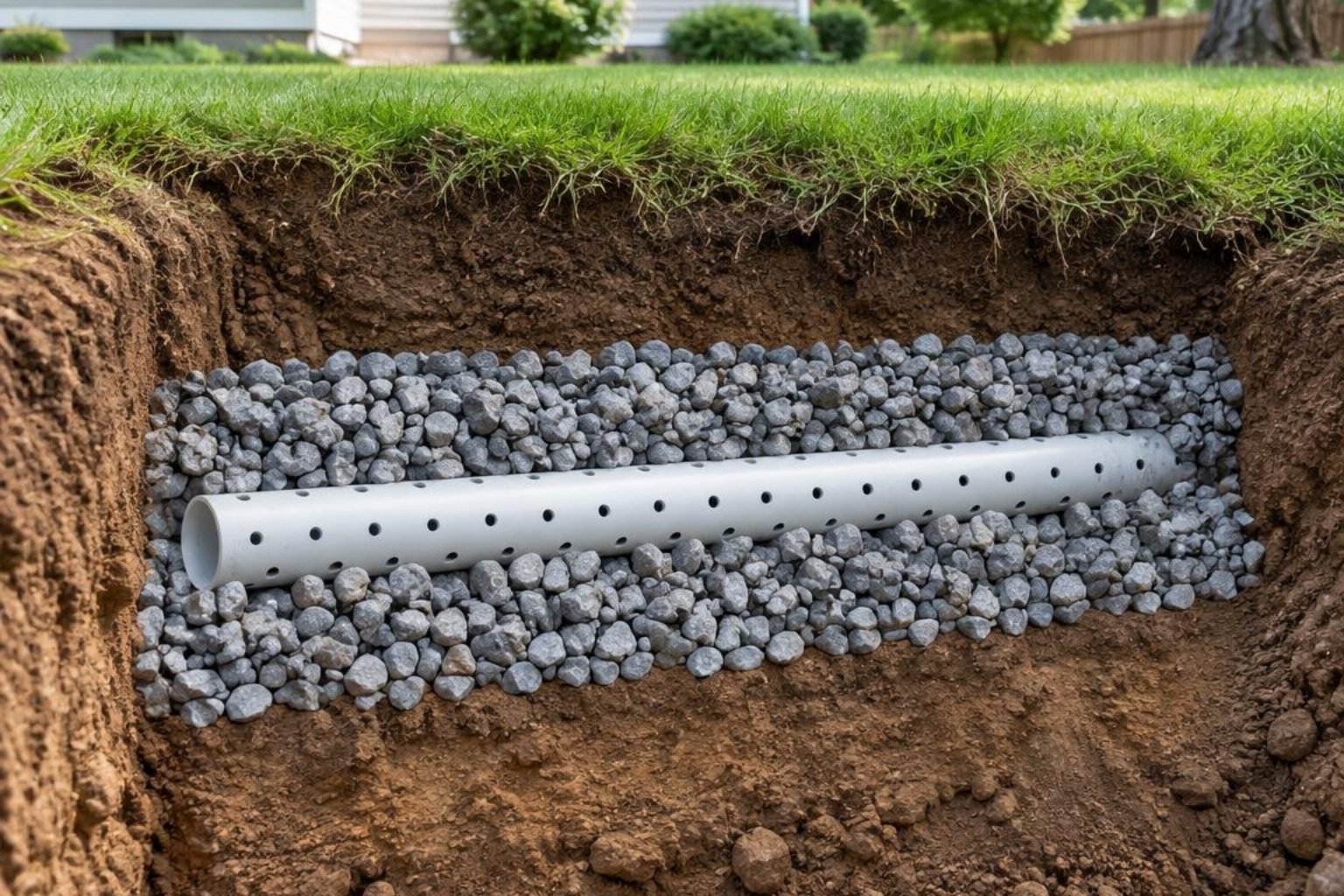
Each lateral line consists of perforated piping set within an excavated trench filled with clean crushed stone or high-capacity plastic chambers. As effluent trickles through the pipe perforations, it enters the surrounding gravel bed or open void space before soaking into the uncompacted native soil underneath.
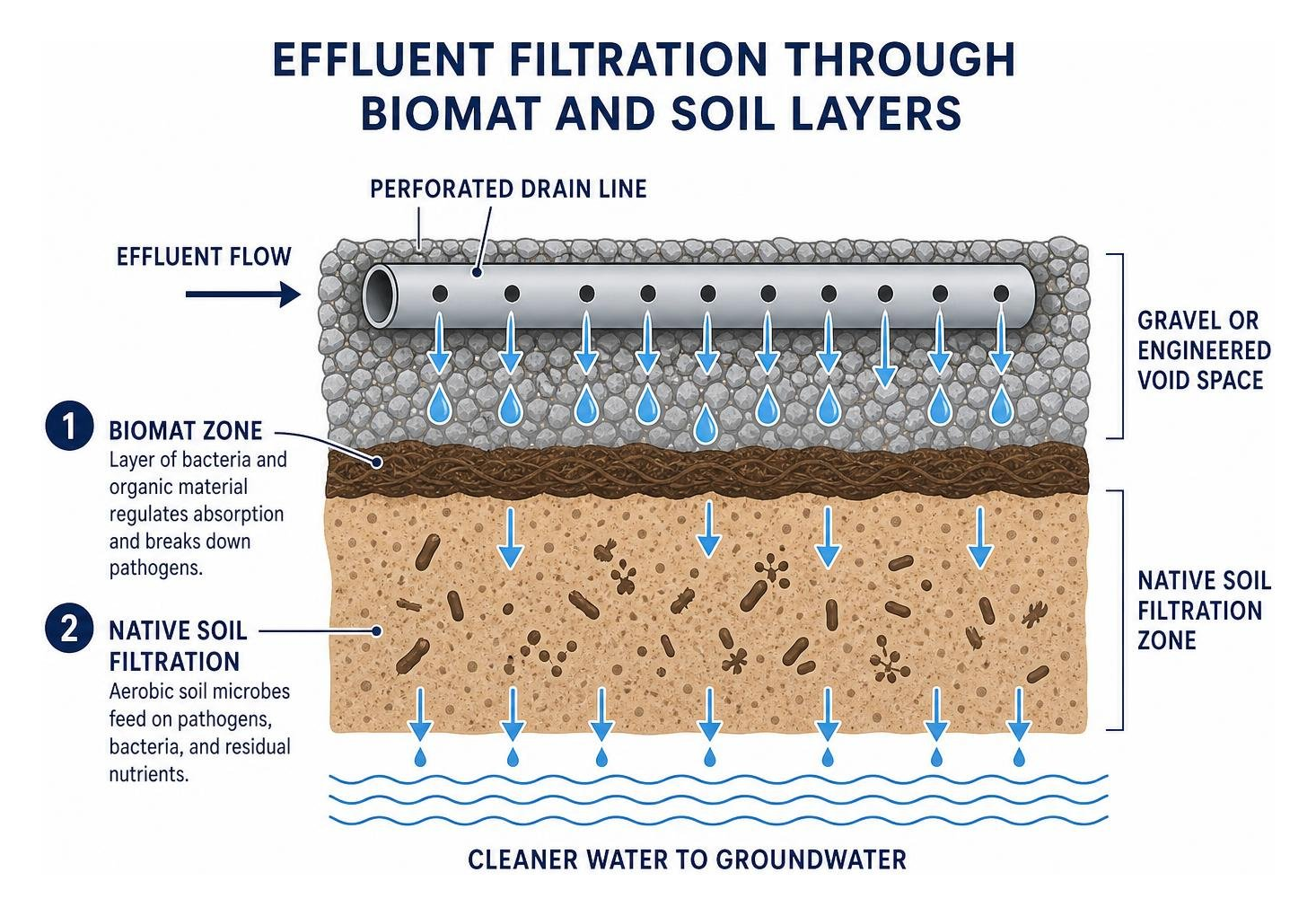
Natural soil purification relies on two interconnected biological layers:
- The Biomat Zone: A thin, living matrix of anaerobic bacteria, minerals, and organic residues forms naturally along the trench bottom and sidewalls. This biomat acts as a biological throttle, slowing water infiltration and breaking down complex organic compounds before they penetrate deeper.
- Native Soil Filtration: Aerobic microflora thrive in the unsaturated, oxygenated soil beneath the biomat. These beneficial organisms digest harmful viruses, coliform bacteria, and organic nutrients as the water slowly filters downward toward the water table.
To operate reliably, these lateral trenches are installed between 18 and 36 inches beneath the surface. This depth shields effluent from harsh freezing temperatures during Indiana winters while maintaining close contact with oxygen-rich topsoil. Standard residential properties generally require between 200 and 600 linear feet of absorption lines divided across three to six parallel trenches.
Types of septic drain lines and distribution systems
Drain line configurations depend heavily on yard topography, soil texture, property boundaries, and local water table heights. Absorption lines fall into several distinct engineering styles:
| Line System Type | Pipe / Trench Material | Footprint Requirement | Primary Advantage | Main Vulnerability |
|---|---|---|---|---|
| Conventional Pipe & Gravel | 4-inch perforated Schedule 40 PVC surrounded by washed stone | Standard (200-400 linear feet) | Proven long-term durability; handles high flow spikes | Heavy gravel delivery can compact local soil |
| Chamber Systems | High-density plastic arch-shaped open-bottom chambers | Reduced footprint (up to 50% smaller) | No gravel needed; easy installation in tight yards | Can be crushed if heavy equipment drives over the field |
| Drip Distribution | Small-diameter flexible tubing with pressure dosing | Flexible footprint; works on steep slopes | Shallow burial works in high water tables | Requires dosing pumps and frequent filter maintenance |
When evaluating field line options, property owners can look at a straightforward performance range:
- Good (Gravelless Geotextile Systems): Lightweight pipe wrapped in synthetic fabric eliminates stone hauling and speeds up placement, though fine silt in dense clay soils can gradually clog the fabric over time.
- Better (Conventional PVC with Crushed Gravel): Rigid Schedule 40 lateral piping surrounded by washed aggregate provides exceptional mechanical durability and handles household volume surges when protected by scheduled tank pumping.
- Best (Engineered Plastic Chambers or Pressurized Drip Tubing): Open-bottom chambers provide maximum soil contact area and unobstructed storage volume, while pressurized drip systems deliver exact, timed effluent doses evenly across difficult slopes or shallow bedrock.
Total cost factors for replacing or installing septic drain lines
When absorption lines fail due to severe sludge migration, root damage, or structural collapse, property owners must assess multiple site conditions to understand project requirements. Site topography, soil percolation rates, and total linear footage dictate the scope of any field restoration project.
Key elements influencing total drain line expenses include:
- Soil Percolation and Soil Morphology Testing: Certified soil scientists determine how quickly moisture moves through local soil horizons. Dense glacial clay requires significantly more linear footage of trenching than sandy loam.
- Permitting and Health Department Approvals: County health officials across Indiana enforce sanitary standards governed by the Indiana Department of Health, requiring thorough site evaluations, layout reviews, and official permits before absorption lines can be installed or expanded.
- Excavation and Site Grading: The labor and machinery required to excavate trenches, manage soil spoils, set laser levels, and re-establish proper yard grade directly influence project scope.
- Aggregate Sourcing and Transport: Conventional gravel systems require multiple truckloads of clean, washed stone, adding material sourcing and logistics costs.
- Targeted Trench Repairs vs. Full Field Replacement: If an isolated pipe section suffers crushing from a vehicle, a targeted repair can resolve the issue at a fraction of the cost of a full field rebuild. Our diagnostic evaluations help determine whether an isolated line cleaning or targeted repair is possible before considering broader measures.
Critical warning signs of failing septic drain lines
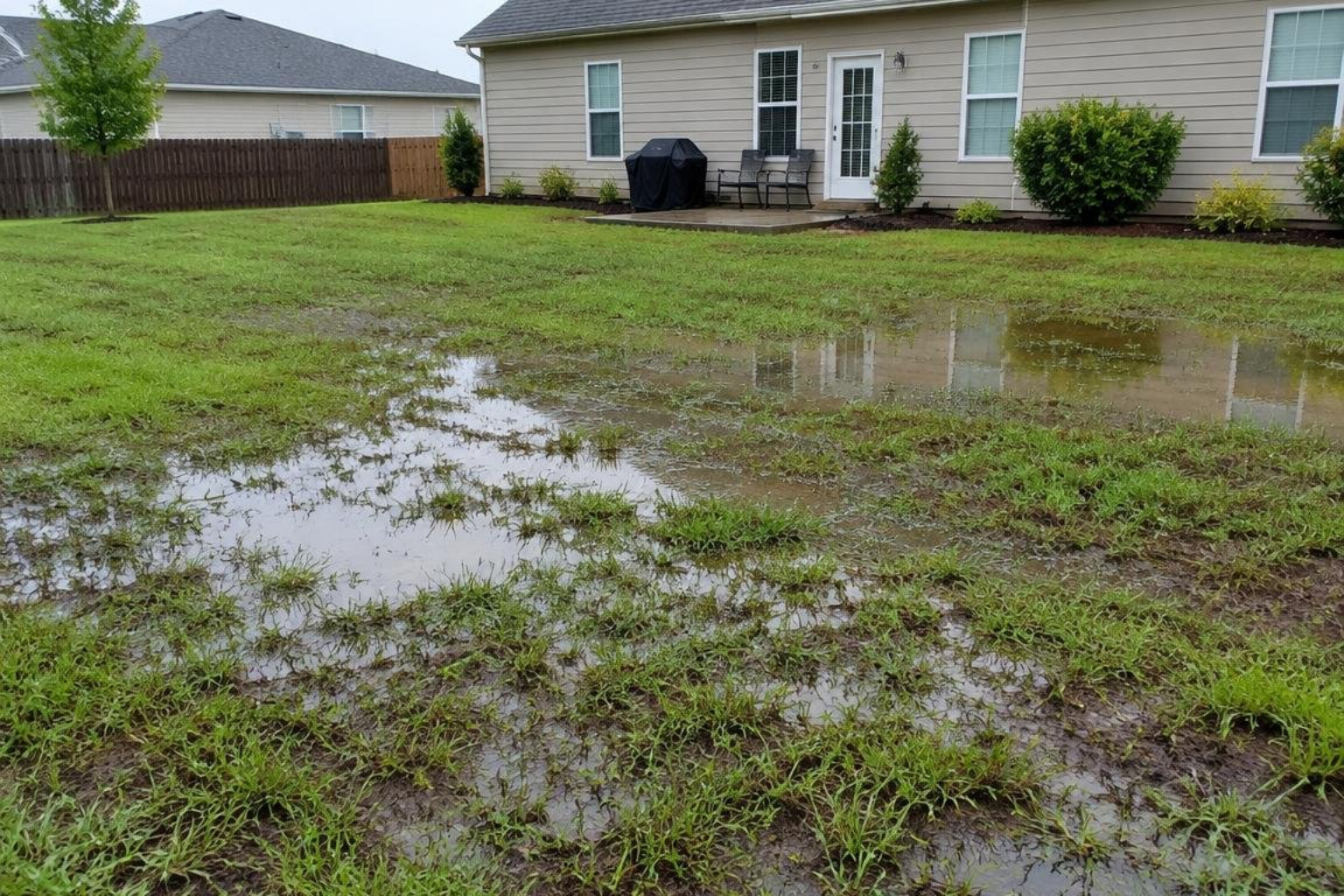
A struggling absorption field shows recognizable warning signs long before raw sewage breaks through the grass surface. Recognizing these early indicators enables homeowners to take corrective action before complete biomat failure or household water damage occurs.
Watch for these common signs of drain line distress:
- Spongy Soil and Standing Water: Wet, squishy turf or persistent puddles appearing directly above absorption trenches indicate that effluent cannot percolate downward into saturated soil beds.
- Vibrant, Fast-Growing Green Stripes: Grass growing noticeably darker and faster in straight parallel lines directly over the trenches signals that surfacing effluent is over-fertilizing your turf with nitrogen and phosphorus.
- Persistent Sewage Odors Outdoors or Indoors: Smelling noxious rotten-egg odors near the absorption area or around lower-level plumbing fixtures means anaerobic gases are escaping from stagnant surface effluent.
- Sluggish Drains and Gurgling Fixtures: Sinks, tubs, and toilets that drain slowly or emit strange bubbling sounds often suffer from hydraulic backpressure caused by waterlogged absorption lines.
- Indoor Sewage Backups: The most severe failure occurs when wastewater cannot exit into the yard and reverses course, flooding basement drains, utility sinks, and first-floor plumbing.
Surfacing wastewater creates immediate environmental hazards by introducing pathogenic bacteria, viruses, and elevated nitrates into surrounding groundwater and surface runoff. If your fixtures start backing up or you notice standing sewage in the yard, contact our technicians right away for emergency septic service to pump the tank and evaluate the underlying cause.
The high risks of DIY drain line repairs
Attempting do-it-yourself excavation or unverified chemical treatments on septic drain lines introduces significant physical danger and risks permanent damage to your property.
Major risks of DIY absorption line work include:
- Buried Utility Strikes: Digging into your yard without professional utility locating risks severing electrical conduits, natural gas lines, or water mains, creating life safety threats and substantial repair bills.
- Improper Trench Pitch: Lateral lines require a precise grade drop of approximately one-eighth to one-quarter inch per foot. Pipes laid too steep pool water at the trench ends, while flat pipes cause immediate solids stagnation.
- Soil Glazing and Compaction: Operating heavy rental trenchers or excavators over wet soil shears clay particles and seals natural soil pores, permanently destroying the ground’s absorption ability.
- Microbiome Destruction from Chemical Additives: Pouring harsh caustic chemicals, acids, or biological additives down drains harms the beneficial bacteria in your tank and absorption field while threatening local groundwater quality.
Safe landscaping practices over septic drain fields
Maintaining appropriate landscaping directly over your absorption trenches preserves underground pipe alignment, protects soil porosity, and promotes natural moisture evaporation without disturbing buried infrastructure.
Recommended landscaping guidelines include:
- Maintain Healthy Turfgrass: Standard turfgrass forms the ideal ground cover for septic drain lines. Grass root systems stabilize topsoil against erosion, facilitate oxygen exchange, and do not invade pipe perforations.
- Choose Shallow-Rooted Herbaceous Perennials: If you want ornamental variety, plant shallow-rooted perennials and groundcovers that do not produce deep, aggressive taproots.
- Keep Trees and Large Shrubs at Safe Distances: Fast-growing trees like maples, willows, poplars, and elms feature aggressive root systems that seek out moisture, readily clogging pipe holes. Always plant trees at a distance equal to or greater than their mature canopy height away from the field.
- Install Subsurface Root Barriers: When property boundaries place trees near the drain field margin, install vertical plastic root barriers at least two feet deep to block root intrusion.
- Avoid Planting Vegetable Gardens: Never grow edible root vegetables or garden produce over absorption lines. Edible crops can absorb pathogenic microbes from wastewater, and annual tilling disrupts shallow pipe beds.
- Divert Roof Runoff and Drainage: Direct all gutter downspouts, sump pump discharge pipes, and landscape grading away from absorption trenches to avoid waterlogging the soil bed with clean surface runoff.
Essential maintenance to maximize drain line lifespan
High-grade Schedule 40 PVC lateral pipes can easily last 30 to 40 years or longer if the upstream septic tank receives consistent professional pumping. However, if tank maintenance is ignored and solids spill past the outlet baffle, drain lines can choke and fail in fewer than ten years. Routine service prevents sludge and grease from entering lateral pipes and suffocating the soil biomat.
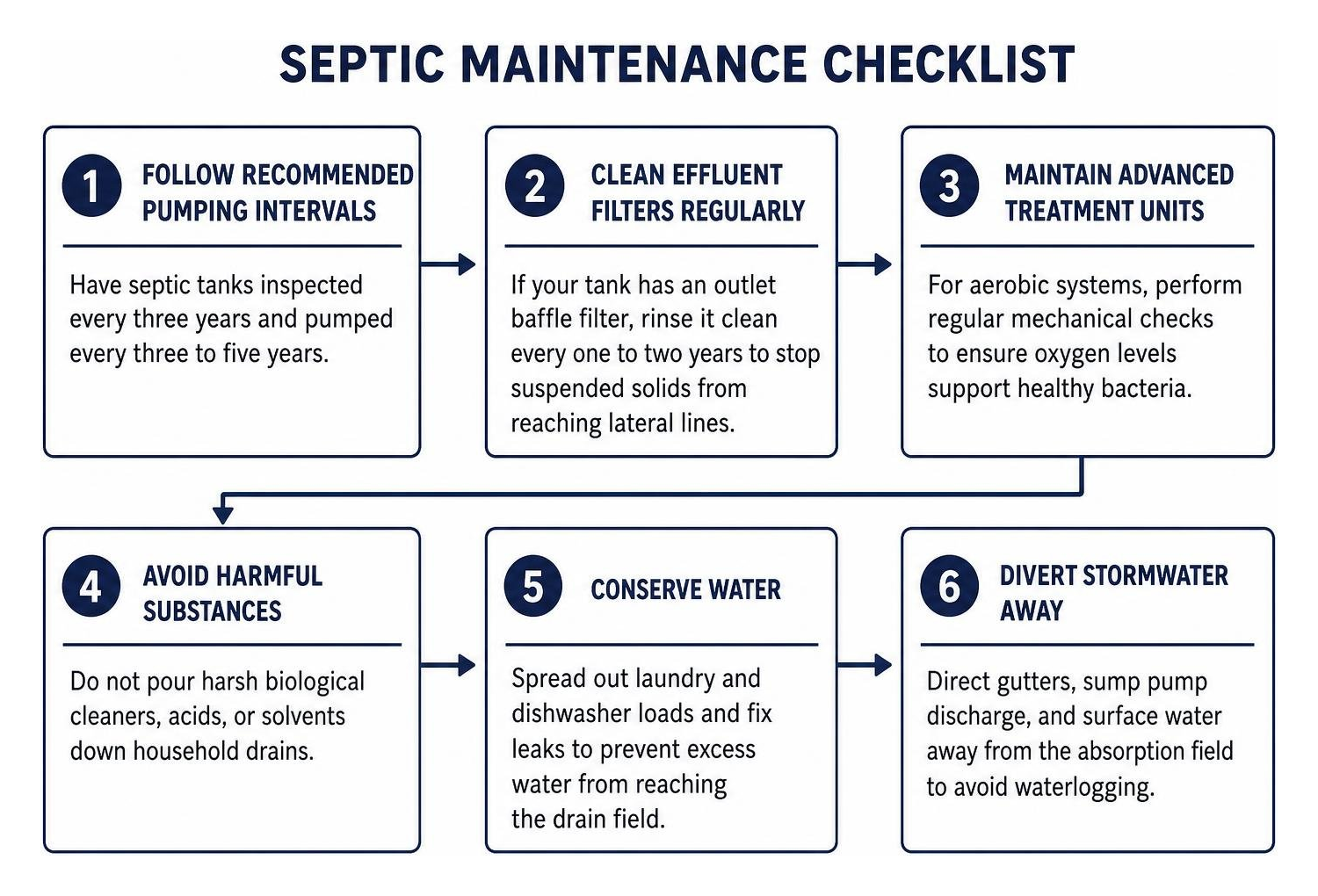
Follow these core maintenance guidelines to maximize system performance:
- Stick to Regular Pumping Cycles: The EPA septic guidelines recommend having your septic tank inspected every three years and pumped every three to five years depending on home occupancy and tank volume. Review our septic tank pumping frequency guide to establish the right schedule for your household.
- Clean Outlet Effluent Filters: If your tank features an outlet filter cartridge, have it inspected and rinsed annually to block suspended particles from reaching your drain lines.
- Maintain Aerobic and Advanced Units: Homes using aerobic treatment systems need ongoing monitoring to ensure proper oxygen levels and healthy biological activity that prevents solids from overloading the drain field.
- Practice Daily Water Efficiency: Spread heavy laundry loads across several days, install low-flow fixtures, and promptly fix running toilets to avoid hydraulic surges that wash suspended solids out into the absorption field.
- Keep Harmful Waste Out of Drains: Never flush wipes, paper towels, feminine hygiene products, coffee grounds, oils, or household solvents down your drains. These materials resist biological decomposition and rapidly build up sludge levels in the tank.
Frequently Asked Questions about septic drain lines
Can you replace damaged septic drain lines without replacing the whole drain field?
Yes. When physical damage is confined to an isolated section, such as a pipe crushed beneath heavy tire pressure or a settled connection near the distribution box, technicians can excavate and repair that specific lateral run. As long as the rest of the soil bed remains healthy and unclogged by migrated sludge, localized repairs restore proper drainage without the cost of a full replacement.
How deep are standard septic drain lines buried in the ground?
Residential absorption lines are normally buried between 18 and 36 inches below finished grade. This depth ensures 6 to 12 inches of protective backfill over the pipes, prevents winter freezing, and keeps the trenches elevated above the seasonal high water table so aerobic soil bacteria have access to atmospheric oxygen.
How long do conventional septic drain lines typically last?
A well-maintained residential absorption field lasts between 20 and 30 years, and the PVC pipes themselves can last over 40 years. The primary cause of premature failure is deferred septic tank pumping, which causes accumulated sludge to spill into lateral lines and permanently clog soil pores.
Choosing a trusted septic service partner in Indianapolis
When plumbing drains begin running slowly or your tank is due for routine pumping, partnering with a proven, local service team protects your home and property value. Blair & Norris has proudly served homeowners across Indianapolis, Carmel, Fishers, Noblesville, Greenwood, and throughout Central Indiana for more than 75 years.
As a dedicated family-owned company, we provide:
- 24/7 Live Phone Support: Speak directly with knowledgeable professionals ready to assist with your septic pumping and diagnostic needs at any hour.
- Dedicated Septic Cleaning and Pumping: Our service scope focuses on expert septic tank pumping, comprehensive system evaluations, line flushing, and preventative cleaning to keep your absorption field healthy and free of accumulated solids.
- Advanced Equipment Standards: For specialized drilling and ground service operations, we utilize Mud Puppy equipment for clean mud recycling and drilling, which protects local grounds and minimizes landscape disruption.
- Proven Local Reputation: Read through our verified Google Reviews to see how our family team supports homeowners throughout Central Indiana.
Keep your wastewater system functioning smoothly and safeguard your yard against premature drain field failure. Schedule your next tank inspection and pumping with Blair & Norris routine septic maintenance today, or contact us directly to request an estimate on our professional pumping services!