
Thaw a Frozen Septic Line Safely Before It Backs Up
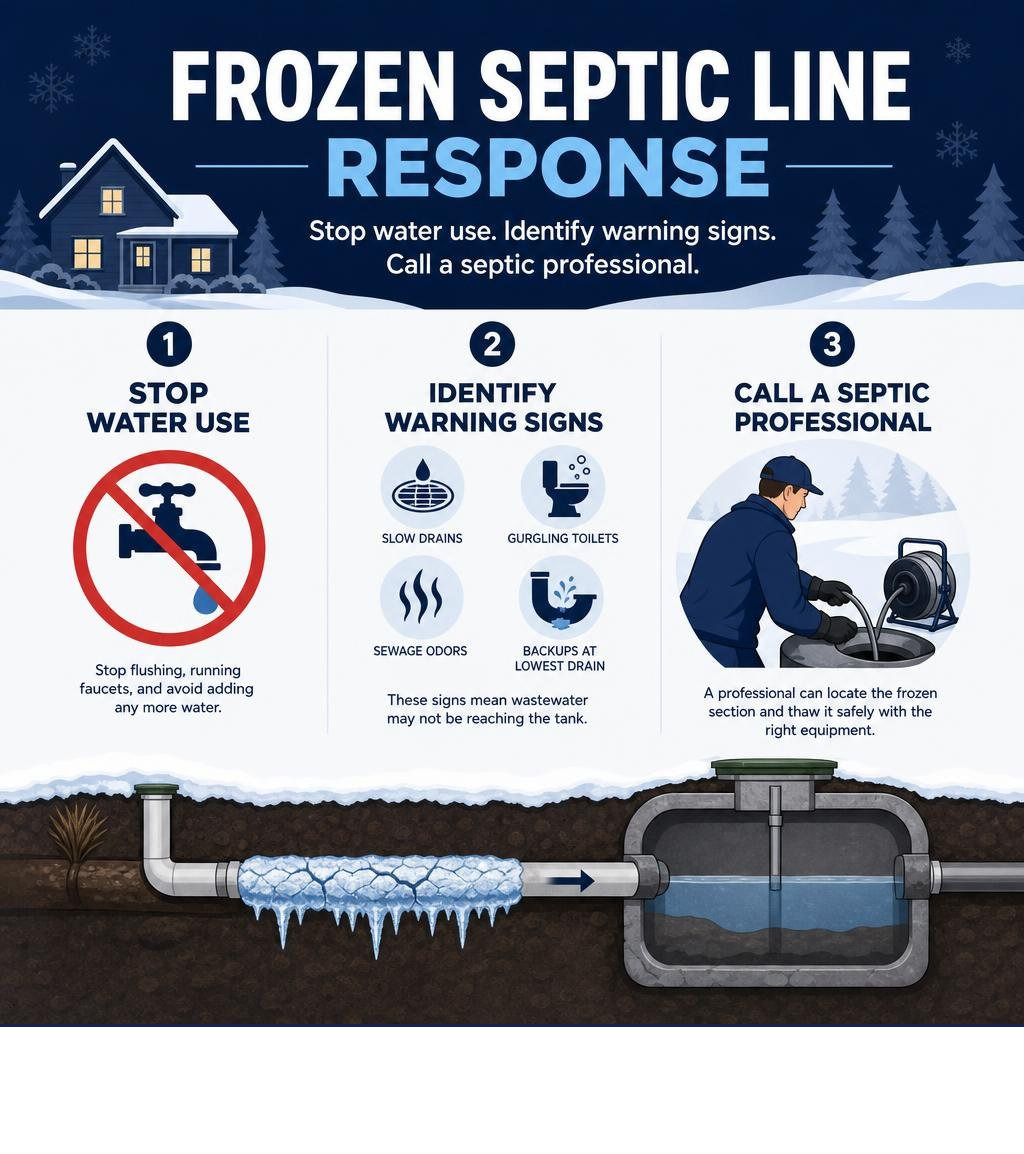
If you suspect a frozen septic line, stop running water immediately. Do not keep flushing toilets, running faucets continuously, or pouring harsh chemicals down household drains. When underground drainage pipes freeze during brutal winter cold snaps, a licensed septic professional can locate the frozen section and thaw it safely using specialized steamers or controlled warm-water jetting equipment.
Watch closely for early warning indicators, including slow drains throughout your house, gurgling toilets, foul sewage odors, or wastewater backing up into your lowest indoor fixtures. These warning signs indicate that domestic wastewater cannot reach the septic tank. Continuing to run water turns a manageable localized freeze into an expensive indoor sewage disaster that requires extensive remediation.
Sub-zero winter weather alone is rarely the sole cause of frozen plumbing lines. A septic line becomes most vulnerable after prolonged periods where temperatures drop below 20 degrees Fahrenheit, especially when ground snow cover is minimal, pipe burial depth is shallow, daily water use is low, or soil above the line has been compacted by heavy vehicles.
I am Mack Blair. With decades of Midwest experience serving Central Indiana homeowners, I have seen firsthand how quickly freezing pipes interrupt daily life and why scheduling an emergency septic system clean out and prompt pumping makes all the difference in protecting your property.
Understanding the Core Causes and Warning Signs of a Frozen Septic Line
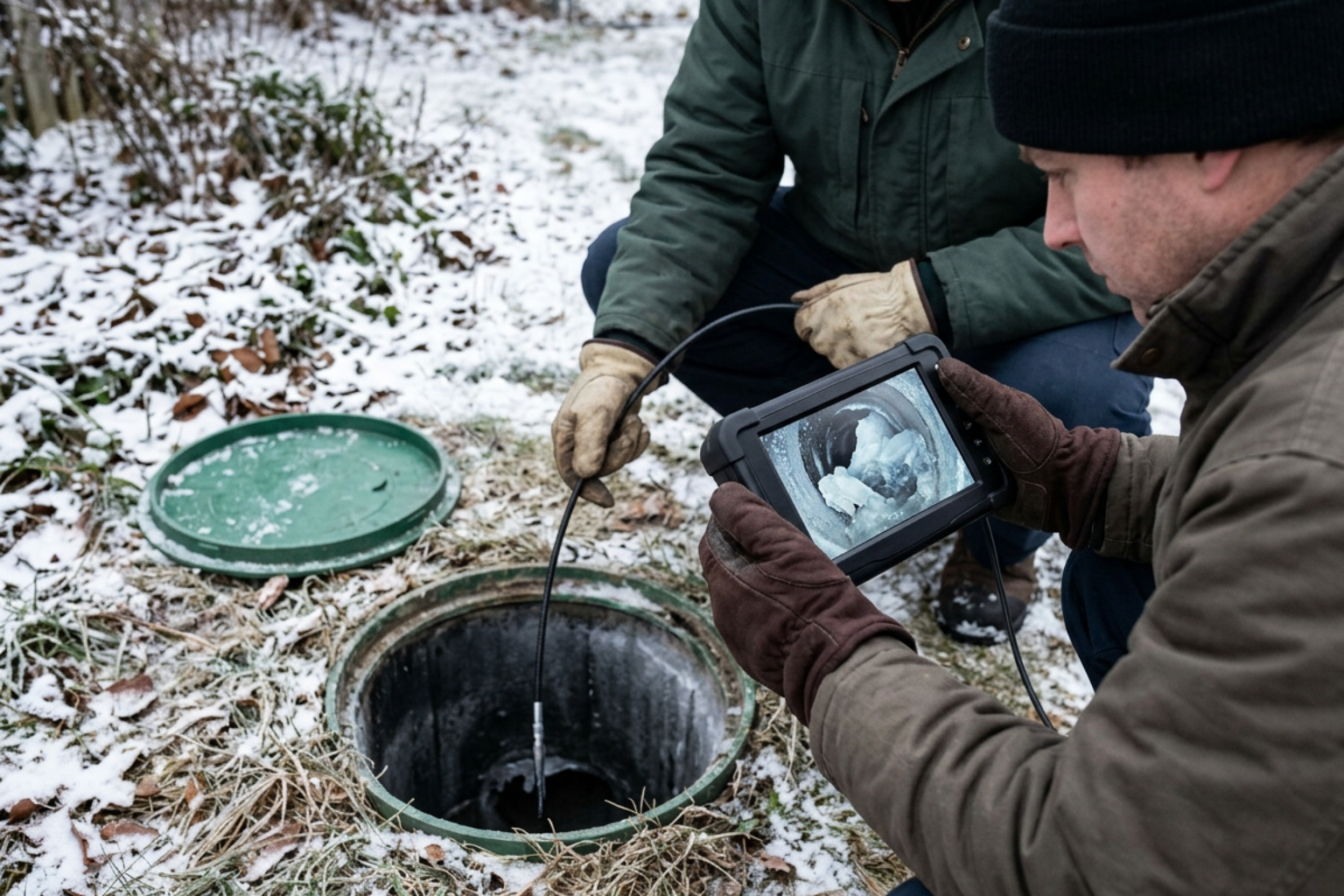
When winter temperatures drop across Central Indiana, buried plumbing faces severe thermal stress. An underground drainage pipe depends on adequate soil insulation, proper slope, and steady wastewater movement to stay clear. When any of those conditions fail, ice crystals build along pipe walls until flow is severely restricted or completely blocked.
Understanding frost depth, soil density, and wastewater flow helps you act quickly before a catastrophic backup damages your home.
Why Septic Lines Freeze During Extreme Cold Snaps
A major cause of cold-weather line failure is local frost depth. In Marion, Hamilton, Hendricks, Johnson, and nearby counties, frost can push deep into bare ground during long cold snaps. If an inlet pipe was installed with inadequate grade, sits in a shallow trench, or has settled over time into a low belly where water collects, freezing becomes inevitable.
Several distinct environmental and mechanical conditions accelerate pipe freezing:
- Lack of Insulating Snowpack: Undisturbed snow traps air and works like an insulating thermal blanket over your yard. Without snow cover, sub-surface frost reaches buried pipes much faster.
- Compacted Snow and Soil: Walking, driving, or operating equipment over the pipe corridor removes insulating air pockets and transfers sub-freezing temperatures deep into the ground.
- Continuous Mechanical Discharge: High-efficiency furnaces and heat pumps release a slow, continuous trickle of cold condensate. Small trickles freeze quickly layer by layer, unlike fast, warm household discharges.
- Low Water Movement and Vacancy: Septic pipes stay open partly because warm water moves through them intermittently. Vacant homes or very low winter water use leave standing droplets in place, where they quickly freeze solid.
For more technical detail on underground freeze patterns, consult this underground freeze symptoms guide.
Recognizing the Immediate Warning Signs of a Freeze
Catching a freeze early helps prevent raw sewage from backing up into lower-level fixtures. Watch for these critical warning signs:
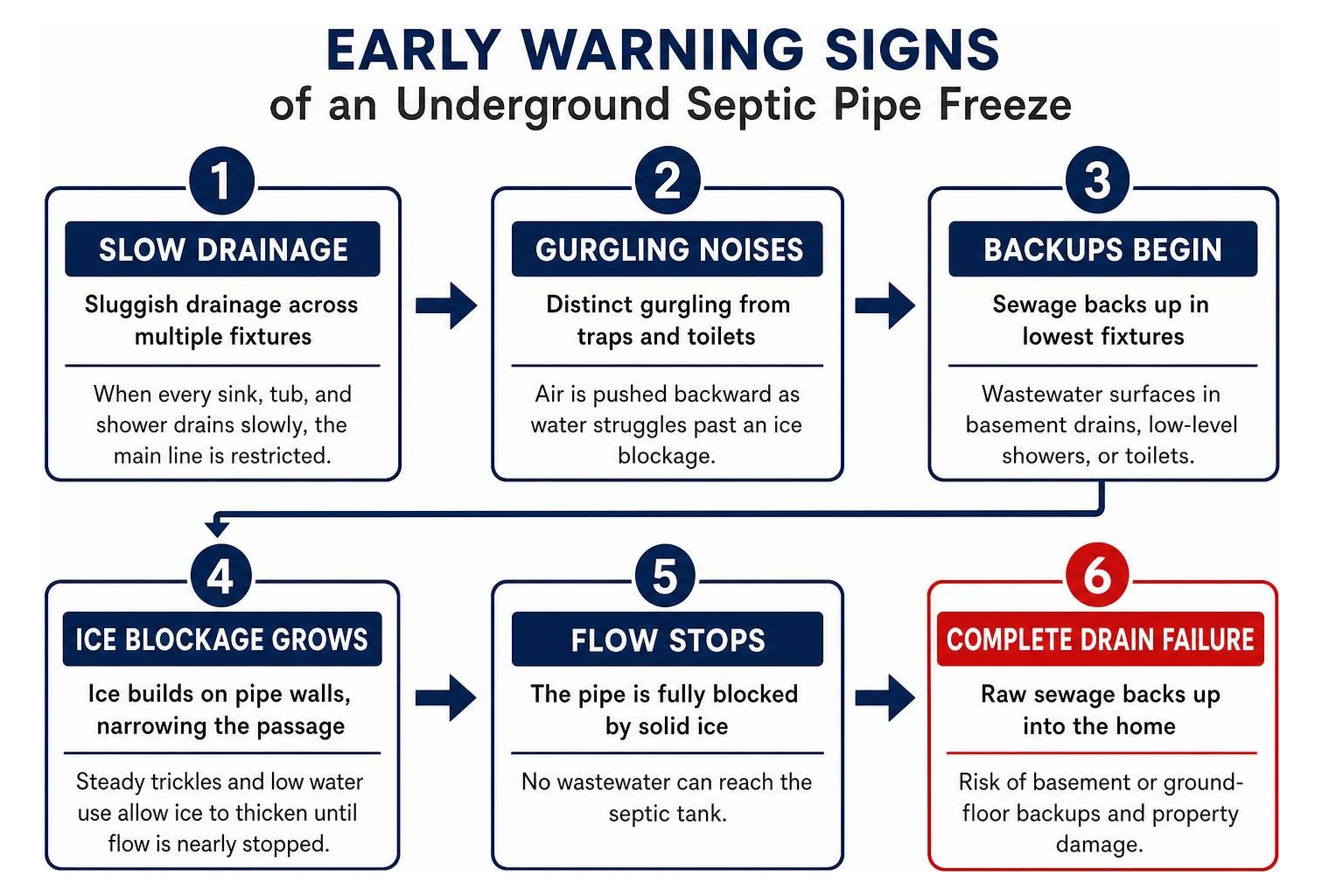
- Sluggish Drainage Across Multiple Fixtures: When sinks, tubs, showers, and toilets all drain slowly at the same time, the main sewer line is restricted.
- Distinct Gurgling Noises: Water struggling past an ice dam forces air backward through fixture traps.
- Sewage Backups in Lowest Fixtures: Blocked wastewater follows the lowest available path, often a basement floor drain or ground-level tub. Review these septic backup warning signs if wastewater appears indoors.
- Frost Accumulation on Exterior Cleanout Caps: An uninsulated cleanout pipe draws freezing air directly into the main line.
- Persistent Sewer Gas Odors: Ice disruptions break trap seals and pull water from plumbing traps, allowing sewer gas into living spaces.
Immediate Steps and the Hidden Dangers of DIY Thawing Methods
If drains stop during sub-freezing weather, the wrong response can crack PVC piping, damage cleanout assemblies, or overload the drain field. Start by stopping water use, protecting low fixtures, and using only gentle, controlled heat.
| Mitigation Approach | Method Details | Risk Level | Primary Hazard or Limitation |
|---|---|---|---|
| Open Flame / Propane Torch | Applying direct heat to frozen outdoor risers or cleanout pipes | Critical Danger | Shatters brittle winter PVC; ignites combustible sewer methane |
| Boiling Water Dump | Pouring boiling (212°F) water into cold indoor fixtures | High Risk | Thermal shock cracks cold PVC; weakens pipe glue joints |
| Automotive Antifreeze | Pouring ethylene glycol down household drains | High Risk | Destroys beneficial digestive bacteria; contaminates groundwater |
| Hair Dryer / Space Heater | Applying indirect warm air along accessible cleanout openings | Low / Safe | Effective only on localized, shallow freezes near access points |
| Controlled Warm Water Flush | Feeding warm (110°F to 120°F) water through a dedicated hose | Safe | Requires proper backflow prevention; slow on extensive freezes |
Safe Step-by-Step Actions to Thaw a Frozen Septic Line
For an accessible pipe run, use a good, better, best approach.
The Good Approach: External Warm Air Application
If the freeze is near the foundation exit or an exterior cleanout riser, gentle warm air is the safest starting point. Remove the cleanout cap carefully, without striking brittle plastic. Aim an electric hair dryer or portable ceramic space heater on a low setting toward the opening. Never leave heating appliances unattended, and keep heat sources away from plastic surfaces.
The Better Approach: Controlled Warm-Water Jetting
For freezes several feet into the pipe, warm water applied at the ice face works better than heating from outside.
To do this safely:
- Use a garden hose or semi-rigid PEX tubing with a rounded brass nozzle.
- Connect it to an indoor warm-water supply with a backflow preventer.
- Insert the hose into the exterior cleanout until it reaches the blockage.
- Run warm water between 110 degrees and 120 degrees F, advancing gently as ice melts.
- Keep a wet/dry vacuum ready to collect meltwater before it overflows.
The Best Approach: Professional High-Pressure Steaming
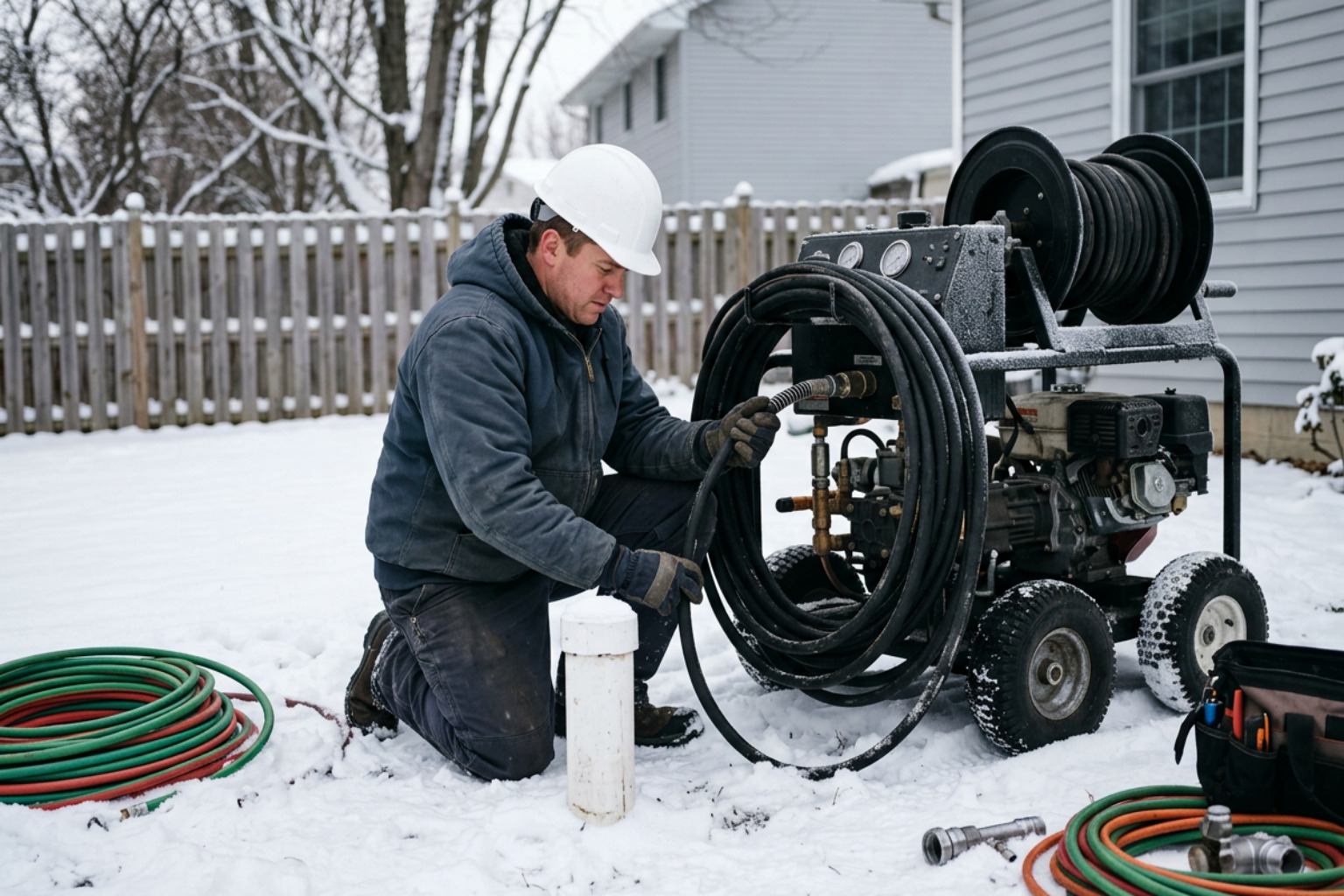
When ice extends yards underground or reaches the septic tank baffle, residential methods often fall short. Licensed technicians use high-pressure steam jetters that deliver regulated heat directly to the blockage without flooding the line or shocking cold PVC.
Hazardous DIY Mistakes That Can Destroy Your System
PVC loses elasticity below freezing, making it easier to crack from impact or thermal shock.
Avoid these high-risk mistakes:
- Never Use Torches or Open Flames: Direct flame can crack plastic and ignite sewer gases, including methane.
- Never Pour Boiling Water Down Frozen Drains: Boiling water applied to a frozen pipe can split PVC walls and weaken joints. Keep thawing water at or below 120 degrees F.
- Never Use Automotive Antifreeze or Harsh Chemicals: Ethylene glycol can kill the anaerobic bacteria that digest solids in your septic tank. Chemical drain openers may also corrode fragile pipes.
- Never Run Faucets Continuously: Running taps adds wastewater behind a solid ice dam, increasing indoor backup risk.
For severe freezing or blocked sewer lines, rely on professional emergency septic service to restore flow safely.
Long-Term Prevention and Winterization Strategies
Preventing winter freeze-ups starts before deep frost reaches the soil. By improving insulation, changing winter water habits, and scheduling routine septic tank pumping, you can reduce the risk of midwinter backups.
Practical Insulation and Ground Cover Techniques
Insulation works best in autumn. Adding cover after the ground has frozen can trap cold below the surface and slow thawing.
Effective strategies include:
- Apply Loose Straw or Hay Mulch: Spread 8 to 12 inches of clean straw, hay, or shredded leaves over septic lines, cleanout risers, and tank lids before sustained freezes. Loose material traps air and mimics snowpack. For more prevention ideas, review guidance on insulating septic pipes.
- Install Rigid Foam Insulation: For shallow pipes under walkways, driveways, or exposed lawns, 2-inch closed-cell extruded polystyrene foam board above the pipe trench can add long-term frost protection.
- Use Self-Regulating Heat Tape: For exterior cleanout risers or shallow sections in unconditioned crawlspaces, outdoor-rated self-regulating heat trace cable can maintain above-freezing temperatures. Use GFCI protection.
- Keep Heavy Traffic Off Septic Areas: Do not drive vehicles, mowers, or snowmobiles over septic lines or drain fields. Compaction pushes frost deeper and can damage cold, brittle pipes.
- Schedule Routine Tank Pumping: Removing excess sludge supports wastewater movement and biological activity. Maintain your system with septic tank cleaning and inspection.
Preparing a Vacant or Seasonal Property to Avoid a Frozen Septic Line
Unoccupied homes and seasonal cabins face higher freeze risks because they lack the warmth of daily water use. Lingering moisture in traps and shallow lines can freeze quickly.
When winterizing a vacant home, follow these steps:
- Shut Off the Main Water Supply: Close the interior water supply valve to prevent leaks from feeding frozen drains if a supply pipe fails.
- Schedule a Pre-Winter Tank Pump-Out: Removing accumulated sludge before winter reduces cold, stationary solids in the tank.
- Protect Internal Traps with RV Antifreeze: Use non-toxic, RV-grade propylene glycol antifreeze in toilet bowls, sink traps, and floor drains.
- Insulate All Access Covers: Make sure cleanout caps and tank lids fit tightly and are covered with straw mulch or foam covers.
- Review Regional Cold-Weather Plumbing Practices: For more winter steps, see this guide to winterizing pipes in Indiana.
Professional Remediation, Repair Costs, and Partner Selection
When home mitigation fails, professional equipment can restore drainage without damaging buried infrastructure. Understanding common service scopes helps you make informed decisions during an emergency.
When to Call a Professional and Expected Repair Scopes
Contact a licensed septic service specialist whenever:
- Drains throughout the home back up at the same time during freezing weather.
- Ice sits deep underground beyond accessible cleanouts.
- You detect strong sewer gas odors or sewage surfacing in the yard.
- A septic tank alarm signals high liquid levels in a pump chamber.
- Wastewater still will not drain after gentle warm-water thawing.
Understanding Professional Service Scope
Professional thawing utilizes trailer-mounted steam units or regulated warm-water hydro-jetters. Technicians may also use diagnostic pipe cameras to locate blockages, verify pipe condition, and confirm restored flow into the tank.
Service scopes usually fall into three levels:
- Minor Service (Thawing and Line Clearing): Technicians clear accessible ice blockages, inspect cleanout ports, and confirm free wastewater flow into the septic tank.
- Moderate Repair (Sectional Pipe Repair): If expanding ice cracks a shallow PVC section or cleanout fitting, the damaged portion may need excavation and replacement when conditions allow.
- Major System Remediation (Manifold or Drain Field Service): If ice pushes solids into distribution or drain field lines, more extensive restoration and line cleaning may be required.
If ice expansion cracks an underground line, septic tank pumping can remove excess wastewater and help technicians access the system safely.
Choosing the Right Service Partner for Septic Care
Choose an experienced local team that protects your property and communicates clearly. Look for:
- 24/7 Live Emergency Support: Emergencies happen outside normal business hours, so live phone support matters.
- Proven Local Experience and Family Ownership: Decades of Central Indiana experience help crews understand local soils, frost lines, and winter conditions. See client feedback in the Google Reviews for Blair & Norris Well and Pump Services.
- Specialized Water System and Drilling Technology: For water system management, well maintenance, and well drilling projects, Blair & Norris utilizes advanced Mud Puppy solids-control equipment specifically for clean mud recycling and drilling operations.
- Clear Specialization in Septic Maintenance: Work with contractors who define their scope clearly. Blair & Norris focuses exclusively on septic system service, cleanouts, diagnostics, and septic tank pumping rather than septic installation claims.
Frequently Asked Questions About Frozen Septic Pipes
Does homeowners insurance cover damage from a frozen septic line?
Most standard homeowners insurance policies cover sudden, accidental water damage caused by burst pipes inside the home, but coverage for underground exterior sewer lines depends on your specific policy terms and optional endorsements.
Policies frequently exclude coverage if freezing results from inadequate maintenance, such as uninsulated shallow pipes or leaving a home unheated during winter. If you experience pipe failure, document damage thoroughly with photographs, save all professional service invoices, and contact your insurance provider immediately to verify coverage limits.
Can I run a continuous trickle of water to keep my septic line from freezing?
No. While running a trickle helps keep fresh water supply pipes from freezing, doing so with a septic drainage system creates serious problems.
A constant, tiny stream of water lacks the thermal mass to stay warm as it travels down a long underground pipe. In freezing soil, this slow trickle forms layered ice sheets inside the line, accelerating blockages. Furthermore, continuous flow adds hundreds of gallons of cold water into your septic tank, disrupting biological digestion and saturating your drain field. Instead of running a constant trickle, run a warm load of laundry or take a warm shower to send intermittent, warm water pulses through the line.
At what temperature are septic lines most likely to freeze?
Septic lines become vulnerable when ambient outdoor temperatures remain below 20 degrees F for two or more consecutive weeks.
The risk escalates dramatically when sustained sub-twenty degree weather occurs without adequate snow cover on the ground. Without an insulating snowpack, frost penetrates deeply into bare earth, chilling the soil around shallow inlet pipes and drain field laterals. Under these conditions, low water usage, leaking fixtures, or soil compaction from vehicles can cause lines to freeze solid within 24 to 72 hours.
Conclusion
A frozen septic line can disrupt your home, but taking fast, careful action prevents catastrophic backups and costly damage. If you notice slow drains, gurgling toilets, or sewer odors during severe cold, stop water use immediately, avoid dangerous open flames or boiling water, and protect your plumbing system.
Long-term winter protection depends on smart prevention: insulate shallow pipes and cleanouts with clean straw mulch, avoid vehicle traffic over drain corridors, and keep up with regular septic tank pumping. Routine pumping removes heavy solids, supports biological warmth, and keeps wastewater flowing freely.
As Your Local Central Indiana Provider, Blair & Norris brings more than 75 years of trusted family ownership, 24/7 live phone support, and dependable service across Indianapolis and surrounding communities. We specialize in expert septic tank pumping, cleanouts, and professional water system maintenance.
Contact Blair & Norris today for an estimate on professional septic tank pumping, system service, and winter maintenance to keep your home protected all season long.