
Why Yearly Septic Tank Maintenance Protects Your Home and Your Wallet
Yearly septic tank maintenance is the single most effective habit a homeowner can build to protect one of the most expensive systems on their property. Here is a quick overview of what a solid annual routine looks like:
Core yearly septic maintenance tasks at a glance:
- Inspect the system — have a licensed professional inspect your tank at least every 3 years (every year for systems with pumps, aerators, or float switches)
- Pump the tank — schedule pumping every 3 to 5 years for most households, or every year if you use a garbage disposal
- Clean the effluent filter — rinse and inspect the outlet filter every 6 to 12 months
- Walk the drainfield — do a visual check each season for soggy ground, odors, or unusually green grass
- Fix leaks immediately — a single running toilet can push 200 gallons of extra water into your system every day
- Watch what goes down the drain — never flush wipes, grease, or household chemicals
Most homeowners do not think about their septic system until something goes wrong. By then, the damage is often already done underground, where you cannot see it.
The reality is sobering. A well-maintained septic system can last 20 to 30 years. A neglected one can fail in under 10. And when it fails, drainfield replacement does not come cheap. Skipping a routine service to save money today can cost you many times more tomorrow.
That gap between “no visible problem” and “system failure” is exactly where yearly septic tank maintenance does its most important work. The sludge building up silently at the bottom of your tank does not send you a warning. Neither does a drainfield slowly losing its ability to absorb effluent. By the time you notice the signs, the damage is often already done.
I’m Mack Blair, owner of Blair & Norris, and with over 30 years of hands-on experience serving Central Indiana homeowners, yearly septic tank maintenance is one of the most common conversations I have with customers who want to avoid a costly emergency. In this guide, I’ll walk you through exactly what a smart, recurring maintenance routine looks like so you can protect your home with confidence.
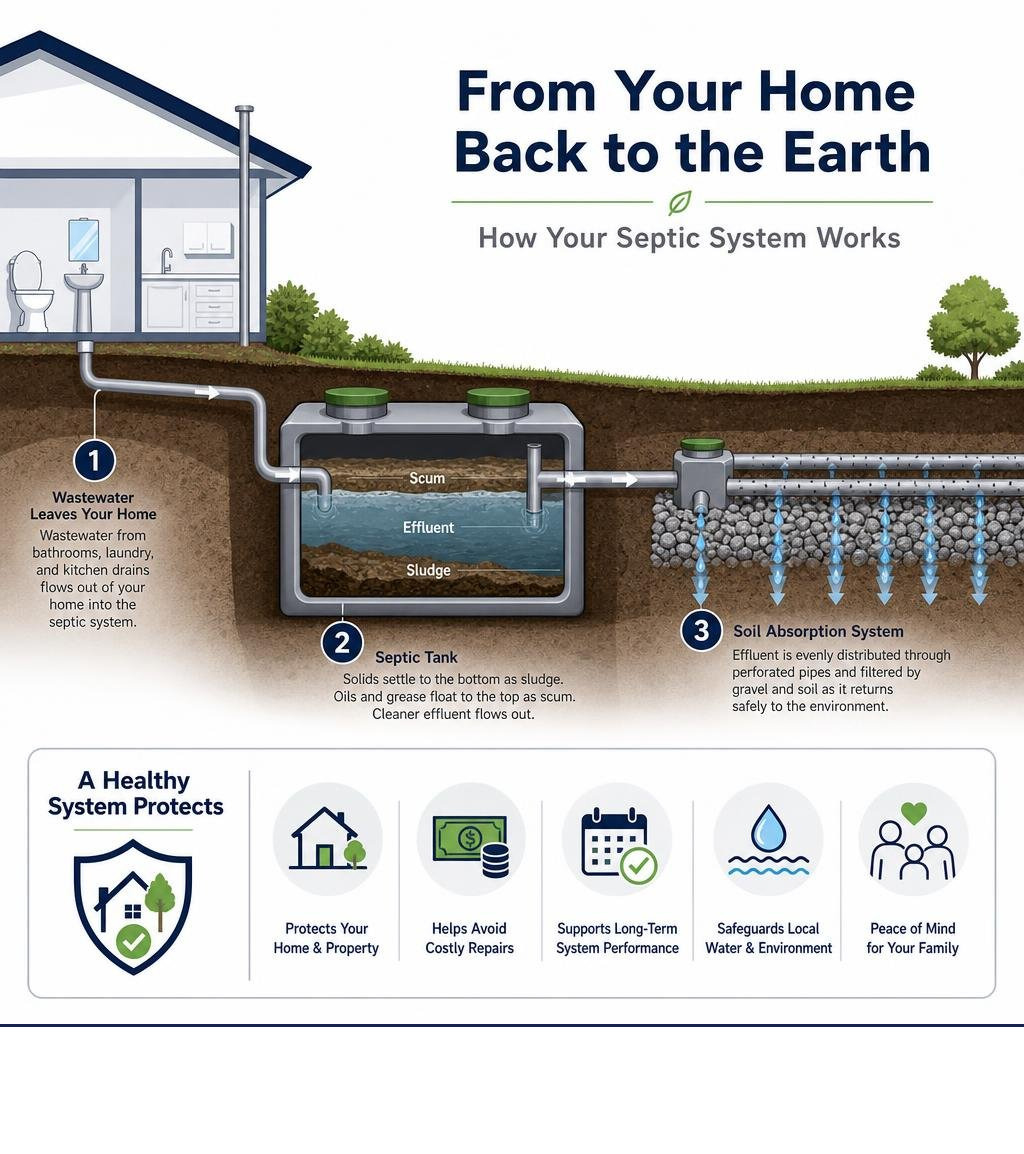
Know your yearly septic tank maintenance terms:
The Hidden Crisis Beneath Your Lawn: Core Problems of Neglected Septic Systems
To understand why a routine is so vital, we have to look at what happens inside your tank when it is ignored. Your septic system is a living, biological wastewater treatment facility. When water leaves your home, it flows directly into the septic tank. Inside the tank, a natural separation process takes place. Heavy solid waste sinks to the bottom, forming a thick layer of sludge. Lighter materials, such as cooking oils, grease, and soap scum, float to the top to create the scum layer.
The relatively clear liquid in the middle, known as effluent, is what exits the tank and flows into your drainfield. In a healthy system, soil microbes perform secondary treatment by purifying this effluent as it filters down through the ground.
When you neglect your system, this delicate balance collapses. Over time, the sludge layer at the bottom continues to rise, and the scum layer at the top grows thicker. If you do not pump the tank regularly, the space available for liquid separation shrinks. Eventually, the solid waste has nowhere to go but out. It escapes the tank and flows directly into your drainfield.
Once solids reach the drainfield, they clog the tiny pores in the soil, forming an impermeable layer known as a biomat. This leads to hydraulic overload, where the soil can no longer absorb the volume of water coming from your home. The water has to go somewhere, so it either pools on your lawn or backs up into your basement.
This is more than just a messy inconvenience. It is a major health hazard. A failing septic system can release harmful pathogens, bacteria, and viruses into the local groundwater, putting your family and neighbors at risk of waterborne illnesses. Additionally, parking vehicles or driving heavy equipment over your yard can cause severe soil compaction, crushing the underground pipes and permanently destroying the drainfield’s ability to absorb water.
To learn more about how to protect your property from these hazards, check out the How to Care for Your Septic System | US EPA guide, and read our helpful resource on the 5 Warning Signs of a Septic System Backup Emergency.
The High Risks of DIY Septic Care and Why Quick Fixes Fail
When homeowners realize they have a septic issue, some attempt to save a few dollars by taking a DIY approach. We strongly advise against this. Working on a septic system is highly dangerous and requires specialized training and protective equipment.
First and foremost, septic tanks produce highly toxic gases, including hydrogen sulfide, methane, and carbon dioxide. These gases accumulate inside the sealed environment of the tank. Simply leaning over an open septic manhole can cause you to inhale these fumes, which can lead to rapid disorientation, loss of consciousness, or fatal asphyxiation in a matter of minutes. Never, under any circumstances, should an untrained individual enter a septic tank.

Beyond the physical safety hazards, DIY maintenance often leads to severe structural damage. Homeowners using metal probes to find their tanks can easily puncture plastic components or crack older concrete baffles.
Furthermore, many homeowners turn to chemical additives as a quick fix, hoping these products will magically dissolve the sludge and eliminate the need for professional pumping. This is a costly misconception. Chemical drain openers and harsh additives contain strong solvents or acids that kill the beneficial bacteria living inside your tank. Without these natural microbes, your system cannot break down organic waste.
Worse yet, some biological additives can artificially liquefy the solid sludge layer, causing those suspended solids to migrate out of the tank and settle in your drainfield. This permanently clogs the soil, turning a simple pumping job into a massive, multi-thousand-dollar drainfield replacement.
For a deeper dive into the science of septic systems and why natural processes are always best, refer to the Septic System Maintenance | Ohioline factsheet and review our Septic System Maintenance Guide.
One Simple Way to Master Yearly Septic Tank Maintenance Needs
The best way to avoid catastrophic failures is to shift from reactive panic to proactive planning. Establishing a seasonal maintenance routine helps catch minor issues before they turn into costly emergencies. Think of your septic system like a car: regular oil changes prevent engine failure, and consistent septic upkeep works the same way.
A yearly routine extends your system’s lifespan by decades and saves thousands in replacement costs. To stay organized, follow the Septic System Maintenance Checklist: The Complete Seasonal Guide for Homeowners and keep our contact info handy for Emergency Septic Services if you run into unexpected issues.
Establishing a Yearly Septic Tank Maintenance Schedule
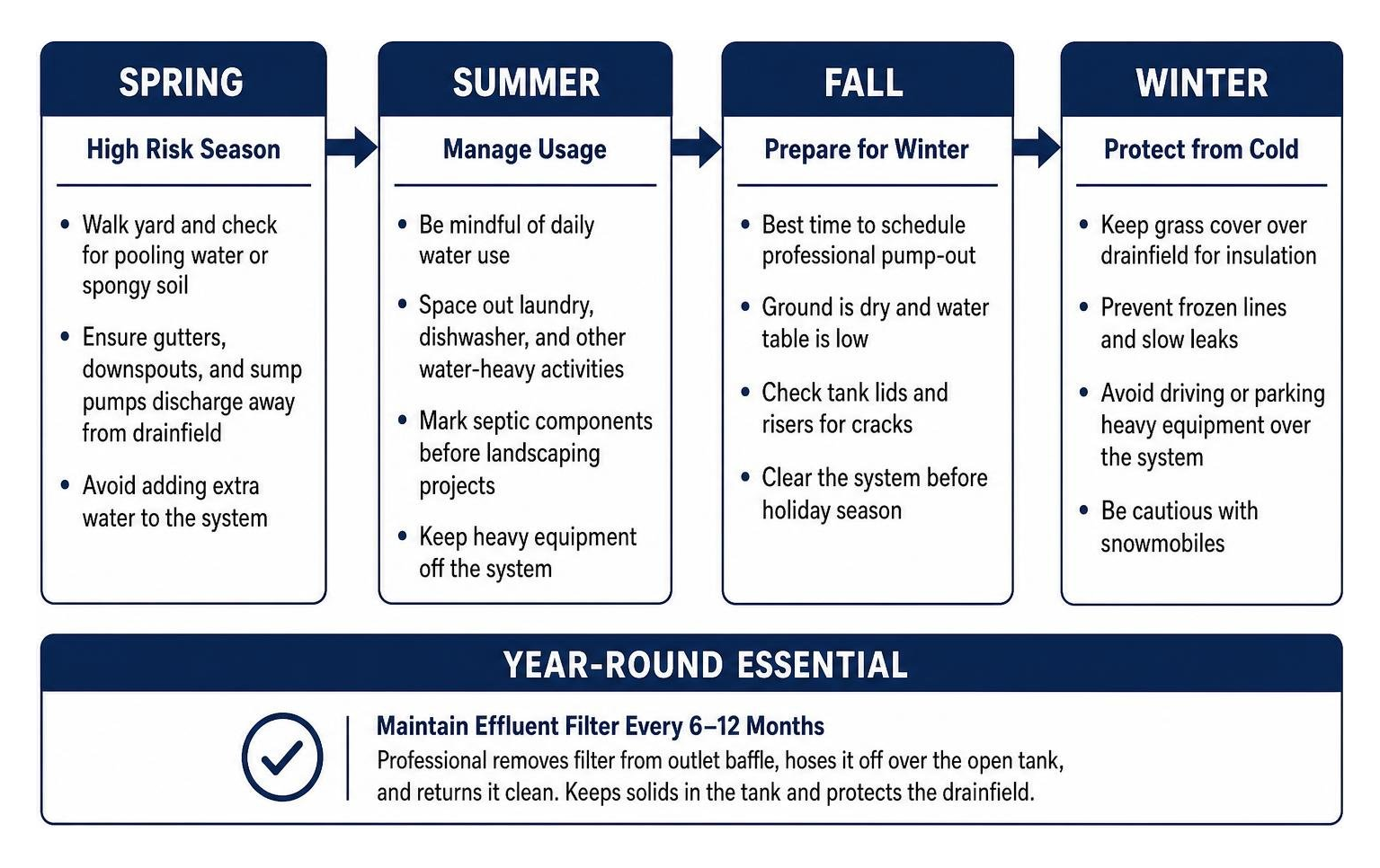
Breaking tasks down by season ensures your system is prepared for Indiana’s unique environmental challenges.
- Spring: Heavy rains and melting snow saturate the ground, making it hard for the drainfield to absorb wastewater. Walk your yard to check for pooling water or spongy soil, and direct gutters and sump pump discharges away from the drainfield.
- Summer: Increased water usage from houseguests can strain your system. Space out water-heavy activities like laundry and dishwashing throughout the week, and mark septic components to keep heavy landscaping equipment off the area.
- Fall: Autumn is the ideal time to schedule a professional pump-out when the ground is dry and the water table is low. Check tank lids and risers for cracks to prevent freezing water from seeping in.
- Winter: Cold winters can freeze uninsulated lines. Maintain a healthy grass cover over your drainfield for natural insulation, and avoid driving or parking heavy equipment over any part of the system.
No matter the season, clean your effluent filter every 6 to 12 months to catch solid particles before they reach the drainfield. A professional can safely pull and hose off the filter directly over the open tank. Read our guide on How to Clean Septic Filter in 5 Easy Steps to see how this works.
Good, Better, and Best Options for Yearly Septic Tank Maintenance
We have outlined a “good, better, best” range of maintenance strategies below to help you choose the right level of care.
| Maintenance Tier | What is Included | Ideal For | Long-Term Benefit |
|---|---|---|---|
| Good (Basic Care) | Pumping the tank every 3 to 5 years; basic household water conservation; visual drainfield checks. | Smaller households with conventional gravity-fed systems. | Prevents major sludge backups and keeps the system operating at a baseline level of safety. |
| Better (Proactive Care) | Pumping on schedule; annual professional inspections of baffles and risers; cleaning the effluent filter every 6 months. | Average-sized families; homes with older systems or active garbage disposals. | Catches structural wear early; significantly extends the life of the drainfield by protecting it from solids. |
| Best (Ultimate Protection) | Scheduled pumping; annual comprehensive inspections; effluent filter cleaning; well pump integration checks; priority emergency service. | Large families; alternative systems with pumps or aerators; homeowners seeking complete peace of mind. | Maximizes system lifespan (up to 40 years); ensures seamless operation of both your water supply and waste systems. |
Choosing a Great Service Partner: What to Look For in Indiana
Because septic systems are complex, underground infrastructures, you need a service partner you can trust. When searching for a provider in Central Indiana, look for a team that is fully licensed, carries comprehensive insurance, and has a long-standing reputation for ethical, honest service.
A great service partner uses advanced, modern equipment to protect your property. For example, during complex well drilling or heavy septic excavations, we utilize state-of-the-art Mud Puppy Drilling Systems. This specialized equipment allows for clean mud recycling and drilling, which minimizes the footprint on your lawn, recycles drilling fluids efficiently, and keeps your property clean and beautiful throughout the process.

Additionally, look for a company that offers 24/7 live phone support. Septic emergencies do not wait for business hours, and having a real, local expert answer your call in the middle of the night can make the difference between a minor repair and a flooded basement.
Before hiring anyone, take a moment to read real feedback from your neighbors. You can view our verified customer experiences directly on the Blair & Norris Google Reviews page to see why Central Indiana families have trusted us with their homes for generations.
Frequently Asked Questions About Septic Care
How often should a septic tank be pumped and inspected?
A standard septic tank should be inspected every 3 years and pumped every 3 to 5 years. However, key factors can alter this timeline:
- Household Size: Larger families generate more wastewater, causing solids to accumulate faster.
- Tank Capacity: Smaller tanks require more frequent pumping to handle the same waste volume.
- Garbage Disposals: Using a disposal doubles the rate of solids accumulation, requiring annual pumping.
- System Type: Alternative systems with pumps or aerators must be inspected annually.
Are septic system additives necessary or beneficial?
No. Additives are unnecessary and do not replace physical pumping. A healthy tank naturally contains the bacteria needed to break down waste. While some biological additives are harmless, chemical additives often contain harsh solvents that destroy beneficial bacteria or damage concrete tanks. Saving your money for routine professional pumping is always the best choice.
What should and should not be flushed down the toilet?
Your septic system is designed to process only human waste and standard toilet paper. Flushing other items can quickly clog your plumbing and ruin your drainfield.
Never flush the following items:
- Wipes, tissues, and paper towels (even those labeled “flushable”)
- Feminine hygiene products and diapers
- Cooking grease, fats, and oils
- Chemical drain openers, paint thinners, and solvents
- Coffee grounds, cat litter, and cigarette butts
- Prescription medications (which kill beneficial bacteria and contaminate groundwater)
Conclusion: Secure Your Home’s Infrastructure with Blair & Norris
Your septic system is a quiet, hardworking champion of your home’s daily comfort and sanitation. By establishing a consistent routine for yearly septic tank maintenance, you can protect your yard, keep your water clean, and avoid sudden, stressful financial surprises.
At Blair & Norris, we have spent the last 75 years serving as Your Local Central Indiana Provider. As a family-owned business, we are proud to offer ethical, high-quality well pump and septic services across Indianapolis, Carmel, Fishers, Noblesville, Greenwood, and the surrounding counties. With our 24/7 live phone support, you never have to face a plumbing or water emergency alone.
Ready to take the stress out of your septic care? Contact our team today to schedule your comprehensive inspection or receive an estimate for your next routine pump-out. Let us help you keep your home’s infrastructure safe and reliable for years to come.
To book your service, visit our page on Expert Septic Tank Pumping Maintenance in Indiana.