
A Well Pump Noise Fix Starts With the Sound
A successful well pump noise fix starts by matching the specific sound to the correct underlying mechanical or hydraulic problem. Modern well systems rely on balanced pressures, steady electrical current, and smooth hydraulic flow. When any component begins to wear out, fall out of alignment, or struggle against flow restrictions, the system generates acoustic warning signs. Before touching any wiring or plumbing components, always shut off electrical power at your breaker box to protect your personal safety.
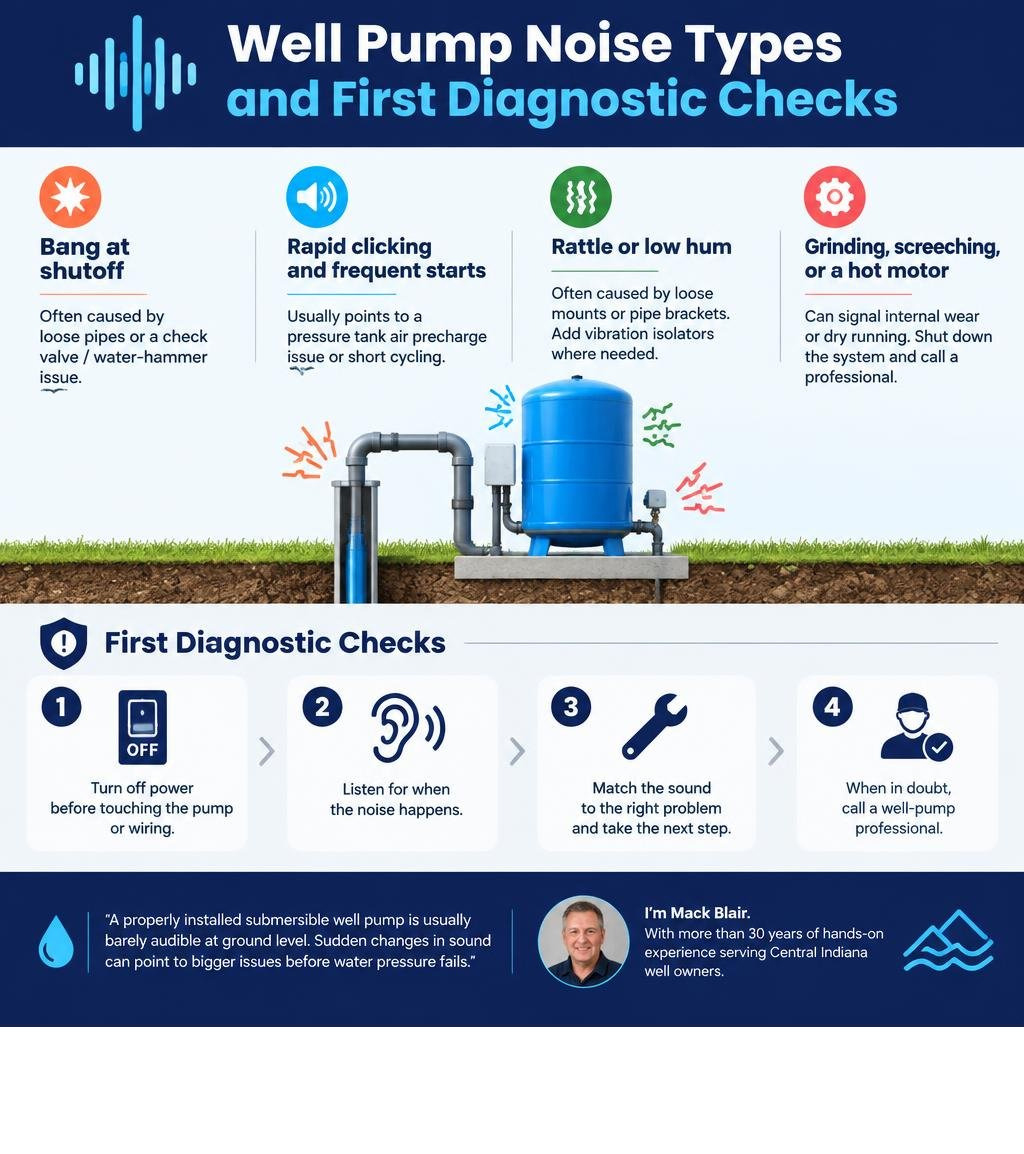
Once power is safely managed, you can listen carefully to pinpoint when and where the noise occurs:
- Bang or loud thud at shutoff: Secure loose pipes, inspect pipe support hangers, and evaluate the check valve for hydraulic shock or water hammer.
- Rapid clicking and frequent motor cycling: Inspect the pressure tank air precharge, check the pressure switch contacts, and look for signs of short cycling.
- Rattle, drone, or low hum through floors and walls: Tighten pump base mounts and wall brackets, then install high-density elastomeric vibration isolators where necessary.
- Grinding, screeching, or a hot motor housing: Shut the system down immediately and schedule professional service. These harsh sounds indicate failed motor bearings, broken impellers, or dry running.
A properly installed submersible well pump operates deep underground and should remain virtually silent at ground level. An above-ground jet pump will produce a steady, moderate hum during normal operation, but the sound should never force you to raise your voice in an adjacent room. Sudden changes in sound profile are critical indicators of air ingress, dropped water tables, failing tank bladders, loose physical mounting, or severe impeller wear.
I am Mack Blair. With more than 30 years of hands-on experience serving Central Indiana well owners, I have seen how a timely well pump noise fix protects household water security and stops small mechanical issues from turning into catastrophic pump burnouts.
Well pump noise fix concepts to understand:
- Professional well pump diagnostic repair and hydraulic balancing
- Pressure tank maintenance, air precharge tuning, and bladder inspection
- Acoustic isolation pads, elastomeric mounting, and silent check valves
- Distinguishing mechanical motor wear from hydraulic cavitation issues
Identifying Well Pump Noise by Sound and Symptom

A residential water well system communicates its mechanical condition through the sounds it produces during daily operation. In a healthy installation, an above-ground jet pump generates a uniform, low-frequency hum, while a deep-well submersible pump operates with total silence inside the home. When abnormal noises develop, they serve as reliable diagnostic clues that point toward physical wear, hydraulic distress, or loose structural mounting.
Listening to the system across startup, continuous pumping, and shutdown helps isolate the root cause quickly. A violent pipe bang right as the pump cuts off suggests hydraulic shock, whereas a persistent high-pitched whine while the pump runs points toward bearing friction or internal motor strain.
| Noise Symptom | Operational Timing | Primary Root Cause | Urgency Level |
|---|---|---|---|
| Metal-on-Metal Grinding | Continuous run | Worn motor bearings or damaged impeller | Critical (Immediate shutoff) |
| High-Pitched Screeching | Continuous run | Dry running, failed seal, or bearing seizure | Critical (Risk of motor burnout) |
| Deep Structural Humming | Continuous run | Rigid pipe coupling vibrating framing | Moderate (Hardware isolation needed) |
| Gravel Rattling / Crackle | Under heavy load | Hydraulic cavitation or low water level | High (Impeller pitting risk) |
| Loud Pipe Bang (Thud) | Immediate shutdown | Water hammer or slamming swing check valve | High (Risk of pipe fracture) |
| Rapid Clicking Switch | Every few seconds | Waterlogged pressure tank (Short cycling) | High (Motor switch burnout risk) |
Mechanical Failures vs. Hydraulic Noise Signatures
Distinguishing mechanical pump failures from hydraulic flow problems ensures you apply the correct remedy before components suffer irreversible damage. Mechanical failures originate within the physical moving parts of the motor and wet end assembly. When internal ball bearings lose their lubrication or experience moisture ingress, they emit a rhythmic grinding, screeching, or chattering sound that matches shaft rotation speed. Over time, an unbalanced impeller will rub against the diffuser casing, generating severe friction that overheats the pump housing and breaks down internal electrical windings.
Hydraulic noise signatures stem from fluid dynamics within your pipes and pump volute. When fluid velocity spikes or suction inlet pressure drops below the vapor pressure of water, microscopic vapor bubbles form and violently implode against metal surfaces. This cavitation produces a signature noise resembling gravel, marbles, or crackling debris churning inside the pump. Cavitation causes severe pitting across impeller vanes, eroding pumping efficiency and eventually destroying water delivery.
Hydraulic shock occurs when the water column abruptly halts or reverses direction upon motor shutdown, violently slamming standard swing check valves against their seats. Homeowners can conduct effective acoustic diagnostics by monitoring pump sound signatures during load shifts to determine whether the noise is hydraulic or mechanical. Routine check valve well pump troubleshooting prevents these pressure surges from fatiguing pipe joints, loosening fittings, and causing water leaks across your plumbing infrastructure.
Structural Vibration and Acoustic Coupling
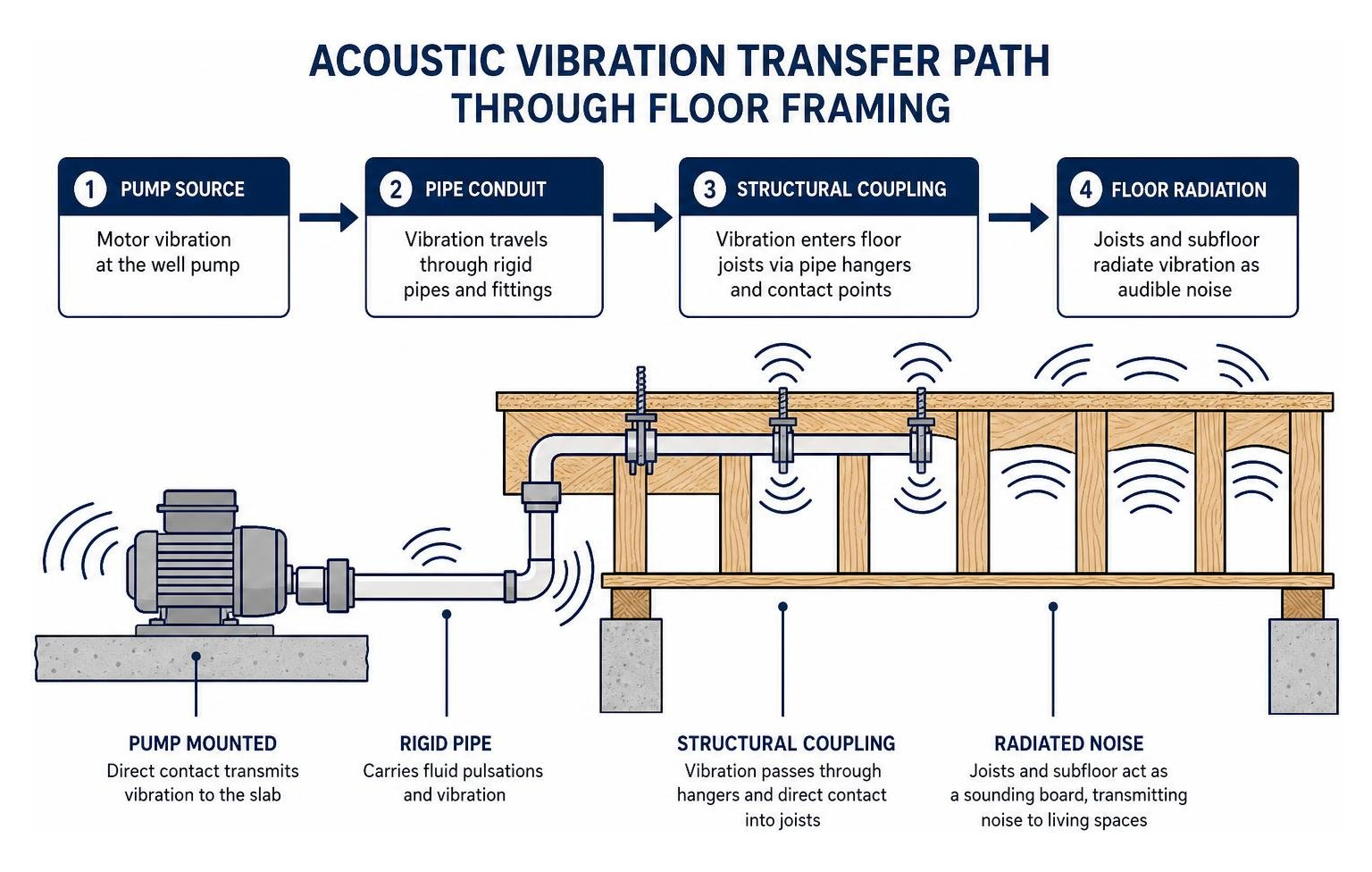
In many cases, the pump mechanism operates within normal mechanical tolerances, but the surrounding building framing amplifies normal vibrations into intrusive indoor noise. When an above-ground jet pump or booster pump is bolted directly to a concrete basement slab, wooden subfloor, or wall framing without vibration damping hardware, rotational energy transfers directly into the building structure. This phenomenon, known as acoustic coupling, can turn a modest 55-decibel motor hum into an 80-decibel drone that echoes through bedrooms and living areas.
Rigid copper, galvanized steel, and PVC piping act as acoustic conduits, transmitting hydraulic pulsations directly into floor joists, wall studs, and drywall surfaces. Securing pipes with rigid metal clamps without rubber liners creates direct transmission pathways. Breaking metal-to-wood and metal-to-concrete contact points using elastomeric hangers, silicone cushions, and rubber dampening pads isolates normal motor hums at the source.
Step-by-Step DIY Well Pump Noise Fix Guide

Before undertaking any hands-on inspection or minor adjustment on your well water system, personal safety must always come first. High-voltage electrical circuits and pressurized water lines present serious hazards if approached carelessly. Always switch off the dedicated 230-volt or 115-volt double-pole circuit breaker inside your main electrical panel. Verify zero electrical potential across the pressure switch terminals using a dependable non-contact voltage tester before removing safety covers or touching pipe fittings.
Pressure Tank and Precharge Well Pump Noise Fix
A pump system that clicks on and off every few seconds while a fixture runs is suffering from rapid cycling. This problem almost always stems from an improperly pressurized or waterlogged pressure tank. When the air cushion within the tank diminishes or disappears, water cannot compress, which forces the mechanical pressure switch to cycle continuously with every small volume of water used.
- Turn off electrical power to the pump at the main breaker box.
- Close the main water shutoff valve entering the home, then open an outdoor hose bib or low-point utility faucet to drain all water pressure until the pressure gauge settles at 0 PSI.
- Unscrew the protective plastic or brass valve cap on top of the pressure tank to access the Schrader air valve.
- Use a calibrated digital tire pressure gauge to measure the tank’s air precharge level.
- Compare this reading against your pressure switch cut-in setting. The air precharge must measure exactly 2 PSI below the cut-in pressure (for example, 28 PSI for a standard 30/50 PSI pressure switch, or 38 PSI for a 40/60 PSI switch).
- If the air precharge is low, attach a manual bicycle pump or portable oil-free air compressor to add clean air until reaching the exact target PSI.
- If water discharges from the Schrader valve stem when depressed, the internal rubber diaphragm or bladder has torn, requiring the practical replacement procedures detailed in our well pressure tank replacement guide.
Addressing pressure tank problems early protects pump motor windings and switch contacts from rapid burnout while eliminating irritating relay clicking sounds.
Acoustic Isolation and Mounting Well Pump Noise Fix
If your jet pump or booster pump sends strong vibrations across your floors, upgrading mounting hardware and pipe connections will produce immediate sound reduction. Homeowners seeking effective vibration isolation should evaluate options across a good, better, and best range:
- Good: Position 3/4-inch heavy-duty neoprene vibration isolation pads under each corner of the pump base, and install thick rubber washers beneath all anchor bolt heads to prevent direct metal-to-concrete contact.
- Better: Fasten the pump to a rigid 1/4-inch powder-coated steel baseplate resting on industrial high-density rubber-cork composite mats, and replace rigid pipe clamps with rubber-cushioned suspension hangers along all supply runs.
- Best: Install a dedicated mass-loaded steel baseplate paired with industrial elastomeric spring mounts, attach flexible stainless steel braided connectors to both the intake and discharge ports, and install a spring-actuated silent check valve.
Replacing the initial 18 to 24 inches of rigid discharge pipe with braided stainless steel connectors decouples fluid pulses from household plumbing lines. Replacing an old swing check valve with a modern silent check valve ensures the internal spring cushions valve closure before reverse flow gathers speed, completely eliminating shutdown water hammer.
Clearing Cavitation, Air Leaks, and Priming Issues
Cavitation develops when a pump tries to move more fluid than the supply pipe can deliver, creating localized low-pressure zones where vapor bubbles form and collapse violently against internal metal components.
- Inspect all suction pipe joints and fittings for pinhole air ingress by applying a light coat of shaving cream or soapy foam while the pump is running; air leaks will visibly pull the foam inward.
- Check your seasonal water table depth in accordance with groundwater resource monitoring guidelines from the Indiana Department of Natural Resources. Submersible pumps should maintain a minimum of 3 to 5 feet of standing water above the intake screen during peak drawdown to prevent air entrainment.
- Purge trapped air pockets from your household plumbing by opening the highest cold-water faucet in the house until water flows smoothly without sputtering or hissing.
- For above-ground jet pumps, confirm that the pump casing is completely filled with water before restarting. Never operate a dry pump volute, as friction will destroy mechanical shaft seals in under 60 seconds without water lubrication.
For stubborn suction lift restrictions, clogged well screens, or subterranean piping defects, review our complete well pump troubleshooting guide to inspect intake hardware safely. If basic DIY steps do not quiet your system, reach out to Blair & Norris for a comprehensive diagnostic assessment.
The Hidden Risks of DIY Well Pump Repairs
While checking pressure tank air precharge and installing rubber pipe isolation clamps are safe DIY projects for homeowners, working on deeper components carries substantial hazards. Well electrical systems use high-voltage 230-volt circuits, and control boxes feature large start capacitors that retain lethal electrical charges long after the main circuit breaker is tripped. Attempting electrical repairs without proper diagnostic training and insulated tools exposes homeowners to severe electrical shock, severe burns, and arc flash hazards.
Submersible pump installations present difficult physical and mechanical risks. A complete drop pipe assembly submerged hundreds of feet into the ground weighs several hundred pounds when full of water. Trying to pull heavy drop pipes by hand or with makeshift clamps can result in dropped pump assemblies, broken torque arrestors, stripped pipe threads, and severed electrical cables. If a drop pipe breaks and falls down the casing, retrieving it requires heavy recovery rigs and costly fishing operations.
Furthermore, unsealing a sanitary well cap without strict sanitation precautions can introduce surface contaminants, airborne debris, insects, and coliform bacteria into your drinking water, violating public health standards established by the Water Systems Council. If you suspect control box failures, electrical shorts, or down-hole mechanical issues, schedule professional well pump repair to keep your water supply safe and clean.
When to Call a Professional for Well Pump Noise
Certain noise symptoms and operational warning signs indicate severe mechanical failure or contamination risks that demand immediate professional intervention:
- An acrid electrical burning odor coming from the motor housing, pressure switch, or well control box.
- Continuous, harsh metal-on-metal screeching or grinding that persists after water lines are verified.
- Complete loss of household water pressure while the pump motor hums continuously or spins without building pressure.
- Persistent hydraulic cavitation caused by declining regional aquifers or severe seasonal well drawdown.
- Visible water leaking from underground pitless adapters, wellhead seals, or casing fittings.
- Circuit breakers that trip repeatedly as soon as the pressure switch calls for water delivery.
When these critical warning signs appear, switch off the main electrical breaker immediately and request emergency well pump service to protect your motor from total destruction. Calling a licensed well contractor ensures your pumping system is diagnosed accurately, safely, and efficiently without risking secondary damage to your home or water supply.
Frequently Asked Questions About Well Pump Noise
Why does my well pump get louder during cold weather?
Plumbing lines naturally contract during freezing winter temperatures, pulling rigid copper and PVC pipes tighter against wooden floor joists and wall studs. This physical tension increases structural acoustic coupling, transmitting motor vibrations throughout living areas much more noticeably. Winter groundwater is also denser, which slightly increases torque load on the pump motor and impeller assembly during startup. Inspecting your system for seasonal freeze hazards and handling well pump cold weather protects exposed pipes from freezing while dampening winter noise spikes.
What is the difference between water hammer and a failing check valve?
Water hammer is an abrupt hydraulic shockwave that creates a loud bang or thud through household plumbing immediately when the pump shuts down. It happens when moving water stops suddenly against a closed valve or fitting. A failing check valve, by contrast, often produces continuous buzzing, chattering, or hissing sounds as water slips backward down the well casing. When an aging check valve loses spring tension, it allows the heavy water column to drop backward, causing massive shockwaves when the pump restarts against the falling water.
Can running a noisy well pump cause total system failure?
Yes. Ignoring persistent warning noises frequently turns an inexpensive hardware adjustment into a full pump replacement. Running a cavitating or dry pump destroys mechanical ceramic seals, erodes brass or composite impellers, and overheats motor windings within minutes. Addressing abnormal sounds promptly restores correct hydraulic balance and prevents costly motor burnouts.
How often should my well pump and pressure tank be inspected?
Homeowners should carry out a basic visual and acoustic inspection every three months, checking system pressure gauge readings, measuring tank air precharge, and watching for rapid switch cycling. A comprehensive professional evaluation by a licensed technician should be scheduled every one to two years to test motor amp draw, insulation resistance, check valve performance, and total well yield.
Restoring Quiet and Reliable Water Flow
Silencing a noisy water well system is straightforward when you identify the sound, pinpoint the underlying issue, and take prompt action. Committing to a predictable maintenance schedule keeps your water supply quiet, balanced, and dependable:
- Every 3 Months: Verify pressure tank air precharge with an accurate digital tire gauge and confirm the tank is not waterlogged.
- Every 12 Months: Inspect mounting bolts, base isolation pads, and rubber pipe hangers for loosening, corrosion, or physical wear.
- Every 5 to 7 Years: Replace check valves, pressure switches, and flexible pipe connectors to prevent hydraulic shock and cycle fatigue.
Blair & Norris stands ready as Your Local Central Indiana Provider for dependable water well and pumping services. We maintain our own clean mud recycling systems by utilizing advanced Mud Puppy equipment for clean mud recycling and drilling throughout the region. This advanced technology keeps drilling operations neat, efficient, and environmentally friendly for properties across Central Indiana.
Beyond our complete residential well capabilities, we deliver specialized liquid waste management solutions focused strictly on professional waste removal, system cleaning, and maintenance. This includes routine septic tank pumping and thorough septic system cleaning for rural homes, as well as specialized commercial pumping services for restaurant grease traps and automotive car wash drainage basins. Our team does not install septic systems or risers, allowing us to focus our full attention on expert pumping, cleaning, and preventative system servicing.
Backed by more than 75 years of ethical, family-owned service and 24/7 live phone support, our licensed technicians can quickly silence rattling pipes, balance your pressure tank, or install a modern, whisper-quiet submersible pump.
Check our five-star customer feedback on Google Reviews for Blair & Norris Well and Pump Services, then contact our friendly team today to schedule an estimate and restore quiet, dependable water flow to your home.