
Why Well and Septic Inspections Matters for Every Rural Homeowner
A well and septic inspection is a professional evaluation of two of the most critical and expensive systems in your home: your private water well and your septic system. These systems are the invisible infrastructure of rural living, working 24/7 to provide clean water and manage waste. Here’s what it covers at a glance:
- Well inspection: Checks above-ground components, electrical systems, pressure tank, pump function, water quantity (yield), and water quality through lab testing
- Septic inspection: Evaluates tank integrity, sludge and scum levels, baffle condition, effluent filters, distribution box, and drainfield absorption
- Water quality testing: Screens for bacteria, nitrates, lead, arsenic, pH, and more
- When you need one: Before buying or selling a home, every 1-3 years for routine maintenance, or any time you notice warning signs like slow drains, odors, or changes in water taste
If your home runs on a private well and septic system, these two systems are your entire water supply and waste management infrastructure. There is no city backup. When something goes wrong, it falls entirely on you. Most homeowners don’t think much about their well or septic system until there’s a problem. And by then, the problem is rarely small. A failing septic system or a compromised well isn’t just an inconvenience. It’s a health risk, an environmental hazard, and potentially a very costly repair. Septic or well replacement can easily exceed the cost of a new roof or HVAC system, making routine inspections one of the smartest investments a homeowner can make.
This guide walks you through everything you need to know — what inspections involve, how often to schedule them, what warning signs to watch for, and how to protect your systems for the long haul. I’m Mack Blair of Blair & Norris, and with over 30 years of hands-on experience in well drilling, pump systems, and septic services across Central Indiana, I’ve seen what happens when well septic inspection and maintenance get overlooked. Let’s make sure that doesn’t happen to you.
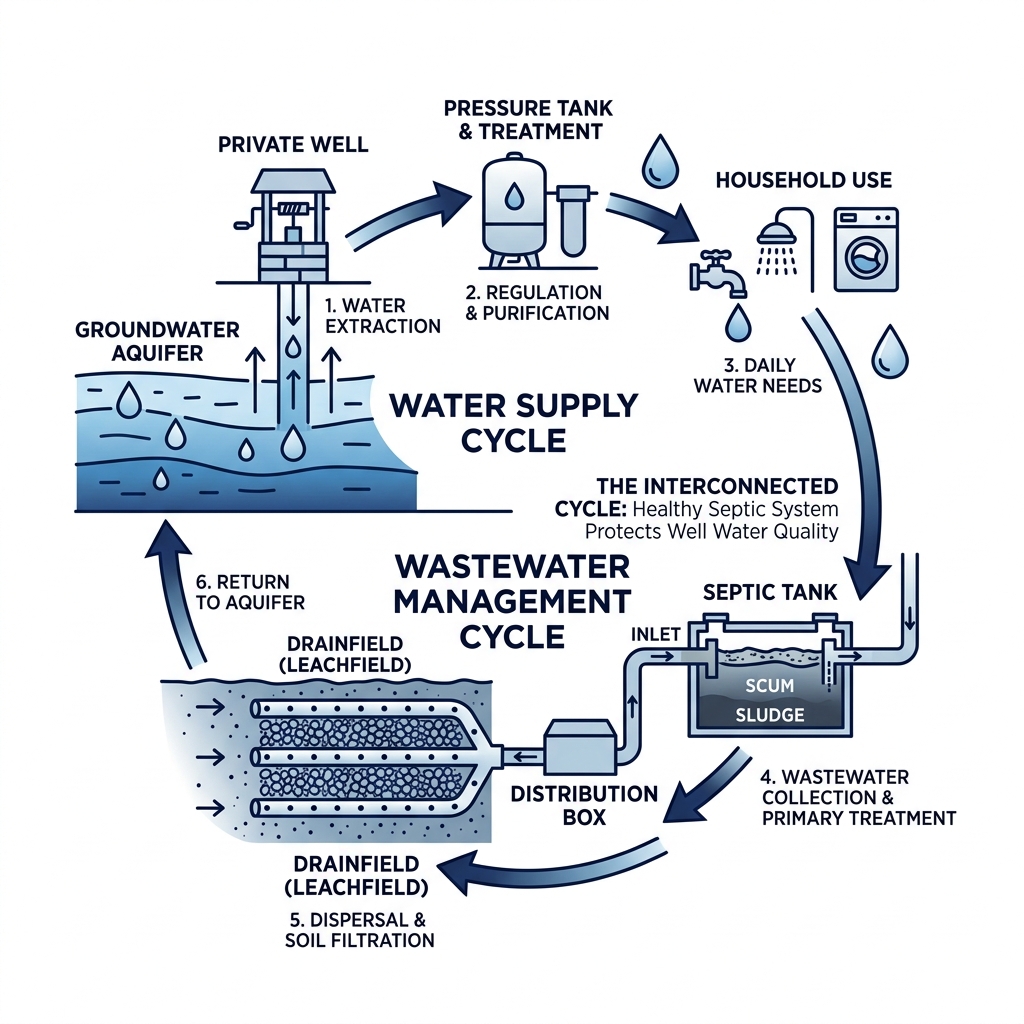
Well septic inspection word guide:
The Critical Role of a Well and Septic Inspections in Homeownership
When you live in a rural or semi-rural part of Central Indiana—whether it’s a quiet lot in Boone County or a sprawling farm in Morgan County—your home is its own utility company. You are responsible for sourcing your own water and disposing of your own waste. This independence is a hallmark of country living, but it comes with the heavy weight of responsibility. In Central Indiana, the soil can vary wildly from the heavy clays of Hamilton County to the more loamy soils found in parts of Hendricks County. These soil variations directly impact how your septic system functions. A professional well septic inspection takes these local factors into account. For instance, clay-heavy soils have lower absorption rates, meaning your drainfield needs to be larger or designed differently than one in sandy soil.

A professional well septic inspection acts as a physical for your home’s health. It ensures that the water your family drinks, bathes in, and uses for cooking is free from harmful contaminants. Simultaneously, it verifies that your wastewater is being treated properly and isn’t leaching back into the groundwater. For those looking to buy or sell a home, these inspections are often non-negotiable. Most major lenders, including those involved with the Rural Home Loans Program, require a septic-system-and-well evaluation to ensure the property is a sound investment. FHA and VA loans have particularly strict requirements regarding the distance between a well and a septic tank to prevent cross-contamination.
The Financial Implications of System Failure
We often tell our neighbors in Indianapolis and surrounding areas that your septic system is likely the most expensive “appliance” you own. While a new roof might cost a significant amount, a full septic system replacement can range from $10,000 to $20,000 or more, depending on the complexity of the soil and the type of system required. To put it in perspective, a septic failure often costs more than replacing both your HVAC system and your roof combined. If a drainfield fails due to “biomat thickening”—a fancy way of saying it’s clogged with slime and solids—you could be looking at a total site excavation. Our real-estate-septic-inspection-guide-2025 highlights that catching a small leak in a baffle or a failing pump today can save you five figures tomorrow.
Risks of DIY Evaluations and Neglect
It is tempting to “eye-ball” your systems. You might think, “The water tastes fine and the toilet flushes, so we’re good.” However, many well contaminants like arsenic or nitrates are odorless, colorless, and tasteless. Similarly, a septic tank can be overfilled with sludge for years without showing surface signs, all while silently destroying your drainfield. DIY evaluations often lead to misdiagnosis. A homeowner might see a wet spot in the yard and assume they need a whole new system, when in reality, a simple pipe repair or tank pumping was all that was needed. Conversely, ignoring signs of failure can lead to illegal waste dumping into local waterways or structural damage to your home’s foundation if a line collapses. To find a qualified professional who understands these nuances, the Septic Locator tool provided by NOWRA is a great starting point, but nothing beats local expertise from someone who knows the specific soil conditions of Central Indiana.
What to Expect During a Professional Well Inspection
A professional well inspection is much more than just turning on the tap. We perform a comprehensive visual and functional check of the entire delivery system. This starts at the well head. We check for a secure, watertight sanitary seal to ensure no insects, rodents, or surface runoff can enter the casing. The well head is your first line of defense. We look for a “sanitary cap” that is bolted down and screened to prevent “critters” like earwigs or mice from falling into your drinking water. We also check the casing—the pipe that goes into the ground—for any cracks or signs of surface water seepage.
Inside the home, we examine the electrical circuits powering the pump, the pressure tank (which prevents your pump from “short-cycling” and burning out), and the pressure gauge. We look for signs of corrosion or leaks that could lead to a sudden loss of water. The pressure tank is the heart of the system; if the internal bladder fails, the pump will turn on and off every time you crack a faucet, which is the number one killer of well pumps in Indiana. For a deeper dive into the mechanics, you can view our guide on well and septic inspection procedures.
Essential Water Quality Tests for Your Well Septic Inspection
Water quality is the “What is in it?” part of the equation. We collect samples—typically from the kitchen tap—and send them to NELAP-accredited labs. A standard panel usually includes:
- Coliform Bacteria & E. coli: Indicators of waste or surface water intrusion.
- Nitrates/Nitrites: Often caused by fertilizer runoff or septic leakage; particularly dangerous for infants.
- Lead & Arsenic: Heavy metals that can occur naturally in Indiana soil or leach from old plumbing.
- Turbidity & pH: Measures of water clarity and acidity, which can affect your pipes and health.
Assessing Water Quantity and Well Yield
The second part of the well equation is “How much do I have?” A well yield assessment measures the “static reserve” (how much water is sitting in the well) and the “recovery rate” (how fast the aquifer refills the well after you use it). We want to ensure your well can handle a family’s peak demand—like running the dishwasher, the laundry, and a shower simultaneously. If the recovery rate is below 3 gallons per minute, it may indicate a failing pump or a declining well. If you find yourself suddenly out of water, our team provides emergency well pump services throughout Central Indiana to get your pressure back up.
The Septic Inspection Process: From Tank to Drainfield
A well septic inspection isn’t complete without getting “under the hood” of your wastewater system. A true inspection requires opening the septic tank. We don’t just look for a green patch of grass; we look at the mechanical health of the tank itself. The septic tank is a living ecosystem that relies on anaerobic bacteria to break down solids. When you use too much bleach or harsh chemicals, you kill these “good” bacteria, and the tank stops working. During our inspection, we measure the “sludge” (the heavy stuff at the bottom) and the “scum” (the floating layer of grease and oils). If these layers get too thick, they start flowing out into the drainfield.
We evaluate the tank’s integrity—checking for cracks in concrete or corrosion in steel tanks. We also inspect the baffles. These are T-shaped pipes at the inlet and outlet that keep solids (sludge) and grease (scum) inside the tank where they belong. If a baffle fails, solids can flow directly into your drainfield, which is the leading cause of system death. For more on this, see our detailed septic inspection page.
Evaluating the Drainfield and Distribution Box
The drainfield is where the “magic” happens. The liquid effluent flows from the tank into a series of perforated pipes buried in gravel and soil. The soil acts as a natural filter, removing pathogens before the water returns to the groundwater. Once solids hit the soil due to a lack of maintenance, they create a “biomat”—a thick, waterproof layer of slime that prevents water from soaking into the ground. This is the point of no return for most systems.
During an inspection, we look for:
- Soil Saturation: We probe the area to see if the soil is waterlogged.
- Ponding: Standing water over the drainfield is a major red flag.
- Distribution Box (D-Box) Health: We often excavate the D-Box to ensure effluent is being distributed equally to all lines.
Common Red Flags Found During a Well Septic Inspection
As a homeowner, you should be the first line of defense. If you notice any of these, it’s time to call us for a septic-tank-cleaning-and-inspection:
- Slow Drains: If every sink in the house is draining slowly, the problem isn’t a clog; it’s likely a full tank or a blocked line.
- Gurgling Sounds: Your pipes shouldn’t “talk” to you. Gurgling often indicates a backup.
- Sewage Odors: If you smell “rotten eggs” in the yard or near drains, gases are escaping where they shouldn’t.
- The “Lush Green” Trap: If one area of your lawn is significantly greener and spongier than the rest, your drainfield may be surfacing effluent.
Maintenance and Longevity: Extending the Life of Your Systems
The average septic system should last 25 to 30 years, and a well can last 50. But “average” depends entirely on how you treat them. At Blair & Norris, we believe in using the best tools for the job. When we perform drilling or repairs, we utilize Mud Puppy equipment. The Mud Puppy is a specialized mud recycling system that allows for much cleaner operations. It recycles the drilling fluids, separating out the sand and cuttings so we aren’t dumping piles of waste on your beautiful Indiana landscape. It’s a “trenchless-first” mindset that keeps your property intact while ensuring a high-quality installation. This technology is essential for modern drilling, as it minimizes the environmental footprint and ensures that the borehole remains stable throughout the process.
Advanced Technology in System Care
We don’t rely on guesswork. Our team uses high-resolution sewer cameras to inspect the lines between your house and the tank. This allows us to find root intrusions or collapsed pipes without digging up your entire yard. We also use electronic locators to find buried tanks when records are missing. For those interested in the broader picture of water infrastructure, the EPA’s Water Finance Clearinghouse offers resources on how communities manage these vital resources. By combining traditional expertise with modern tools like the Mud Puppy for clean mud recycling and drilling, we provide a level of service that protects both your home and the local environment.
Professional Pumping and Cleaning Schedules
The golden rule of septic maintenance is the 1/3 rule: if the sludge and scum occupy more than 1/3 of the tank’s total volume, it must be pumped. For most Central Indiana families, this means a professional pumping every 3 to 5 years.
| Feature | Good (Basic) | Better (Proactive) | Best (Premium) |
|---|---|---|---|
| Pumping | Every 5 years | Every 3 years | Every 2-3 years + Filter Clean |
| Water Testing | Only at home sale | Annual Bacteria Test | Annual Full Lab Panel |
| Inspection | When problems arise | Every 3 years | Annual Visual + Camera Scope |
| Habits | Uses garbage disposal | No grease down drain | “Think at the Sink” + Low Flow |
Neglecting this schedule allows solids to carry over into the drainfield. Once the drainfield is “blinded” by solids, no amount of pumping will fix it—you’ll be looking at a full replacement. You can learn more about our septic tank cleaning and inspection services to stay on track.
Choosing the Right Partner for Your Central Indiana Property
Not all inspectors are created equal. A general home inspector might do a “dye test” (which is often unreliable as it can take days for dye to appear), but a specialized contractor like Blair & Norris provides a comprehensive mechanical evaluation. We understand the nuances of Indiana’s geology and how it affects your well’s performance and your septic system’s drainage. Our technicians are trained to look beyond the surface, using their decades of experience to identify potential failures before they become emergencies.
Elements of a Great Service Partner
When you’re looking for someone to handle your well septic inspection, look for these “Must-Haves”:
- Longevity: We’ve been serving Central Indiana for over 75 years. We know the water table in Noblesville and the soil types in Greenwood like the back of our hands.
- 24/7 Support: Well and septic emergencies don’t wait for business hours. We provide live phone support around the clock because we know that a backup at 2 AM is a crisis.
- Ethical Service: As a family-owned business, our reputation is everything. We won’t sell you a new system if a simple repair will do. We believe in transparency and providing you with all the options.
- Accredited Labs: We only use NELAP-accredited laboratories for our water testing to ensure your family’s safety. This ensures that your results are legally defensible and scientifically accurate.
If you’re experiencing a backup or a loss of water pressure right now, don’t wait. Check out our emergency services page for immediate assistance.
Frequently Asked Questions about Well and Septic Systems
How often should I have my well and septic system inspected?
For a healthy system, we recommend a professional well septic inspection every 3 years. However, your well water should be tested for bacteria annually. If you are buying or selling a home, an inspection is almost always required during the “option period” of the contract to protect both the buyer and the lender.
What are the most common causes of septic system failure?
The “Big Three” are:
- Lack of Pumping: Solids fill the tank and clog the drainfield.
- Hydraulic Overload: Too much water (leaky toilets or doing 10 loads of laundry in one day) flushes solids out of the tank before they can settle.
- Flushing Non-Biodegradables: Wipes (even “flushable” ones), grease, and chemicals kill the good bacteria that break down waste.
Can I perform my own well water testing?
While DIY kits exist at big-box stores, they are often less accurate and don’t cover the full range of contaminants found in Indiana groundwater. For legal documents (like home sales) or for true peace of mind, a lab-certified test is the only way to go. Professional testing ensures that the sample is collected correctly without contamination from the faucet itself.
Are septic additives necessary?
Most experts agree that if you maintain a healthy bacterial balance by avoiding harsh chemicals, additives are unnecessary. The human waste entering the system provides all the bacteria needed for proper decomposition.
Conclusion
Your well and septic systems are the unsung heroes of your home. They work silently beneath the surface to provide you with life’s most basic necessity and to manage your household waste safely. A well septic inspection isn’t just a box to check during a real estate transaction; it’s a vital part of responsible homeownership that protects your health, your property value, and our shared Indiana environment. By staying proactive with regular pumping, mindful water use, and professional evaluations using advanced tools like the Mud Puppy for clean drilling, you can ensure these systems serve your family for decades to come.
Whether you’re in Fishers, Carmel, or out in the rural stretches of Hendricks County, Blair & Norris is here to be your local Central Indiana provider. We take pride in our 75-year history of serving this community with integrity and technical excellence. Don’t wait for a backup or a dry well to find out the condition of your system. Being proactive today prevents the stress and massive expense of a system failure tomorrow.
Don’t wait for a backup to find out the condition of your system.
Contact Blair & Norris today for a comprehensive well and septic service estimate and let our family protect yours.